
Things
Tulip
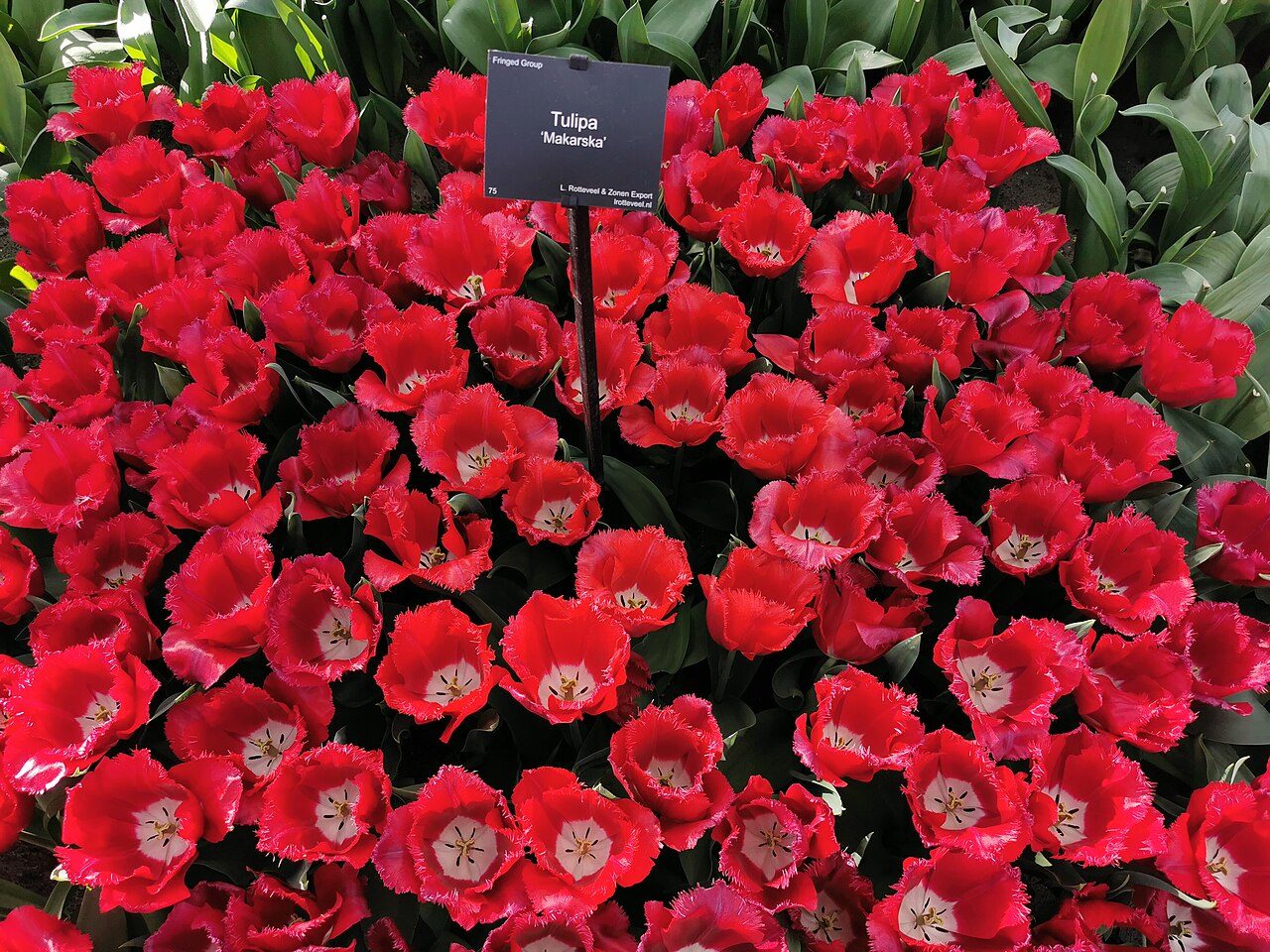
The tulip is a Central Asian flower, cultivated in Istanbul by 1055 and prized in the Ottoman sultans' gardens, which reached Europe in the 1550s through the ambassador Ogier de Busbecq and the botanist Carolus Clusius. In the Dutch Republic its bulb prices soared and collapsed in the winter of 1636-37 - the famous tulip mania, whose true scale historians still dispute.
At a Glance
- What it is
- Tulipa, a genus of spring-flowering bulbs in the lily family (Liliaceae), whose wild species originate in the mountains of Central Asia
- Ottoman cultivation
- Cultivated in Istanbul as early as 1055 and, by the 15th century, among the most prized flowers of the Ottoman sultans' gardens (Kew)
- Arrival in Europe
- Ogier de Busbecq, imperial ambassador to Suleiman the Magnificent, sent the first bulbs and seeds to Vienna in 1554; Carolus Clusius planted them at Leiden from 1593
- The broken tulips
- The prized flame patterns were caused by a virus, as Dorothy Cayley showed in the 1920s - unknown in the 1630s, so the rarest bulbs could not be reliably reproduced
- Tulip mania
- Contract prices peaked in January-February 1637 and collapsed in early February; the scale of the episode is disputed by historians (see Myths and disputes)
- Keukenhof
- Founded by bulb growers in 1949 and opened in 1950 at Lisse; about seven million bulbs are planted each autumn across 32 hectares
Introduction
No flower has been, by turns, a sultan's treasure, a thief's prize, a speculator's ruin (or not), and a nation's emblem. The tulip began wild in the mountain country of Central Asia, was cultivated in Istanbul by the eleventh century, and became one of the most prized flowers of the Ottoman sultans' gardens. Carried west by diplomats and botanists in the sixteenth century, it reached the Dutch Republic just as that small trading nation became rich - and in the winter of 1636-37, prices for its bulbs rose and collapsed in the episode remembered as tulip mania, the first speculative bubble in the textbooks.
This page tells both stories carefully, because the second has been retold so often, and so loosely, that historians now dispute how much of it happened. What is not disputed is the ending: the Netherlands, which supposedly ruined itself over a flower, became and remains the centre of the world bulb trade, and each spring the gardens at Lisse stage the largest flower show on Earth.
From Central Asia to the Sultan's Gardens
Wild tulips are plants of the Central Asian mountains, and many species still originate there. Kew records that tulips were cultivated in Istanbul as early as 1055, and that by the fifteenth century they were among the most prized flowers in the opulent gardens of the sultans of the Ottoman Empire. The flower's very name preserves the journey: tulip derives, through Turkish, from the Persian word for a turban, whose shape the bloom was thought to resemble. In Ottoman culture the tulip became a motif of art, ceramics and court life, cultivated in hundreds of named varieties.
Busbecq, Clusius and the Arrival in Europe
The introduction of the tulip to western Europe is usually credited to Ogier de Busbecq, ambassador of the Emperor Ferdinand I to Sultan Suleiman the Magnificent, who sent the first tulip bulbs and seeds to Vienna in 1554, the British Library's account confirms. From Vienna the bulbs spread to Augsburg, Antwerp and Amsterdam. Busbecq's associate, the Flemish botanist Carolus Clusius, planted tulips in the Vienna imperial gardens from 1573 and, after moving to the University of Leiden in 1593 to found its botanical garden, planted his collection there; the first tulips flowered in the Netherlands in spring 1594.
Clusius described the tulip in print, documenting 22 varieties in his Rariorum Plantarum Historia, and he also described, without understanding it, the phenomenon that would make tulips priceless: breaking, in which a plain flower erupted into feathered flames of contrasting colour. We now know the cause was a virus, spread by aphids, which weakened the bulb even as it painted it - a fact established only in the late 1920s, when the mycologist Dorothy Cayley showed the effect could be transferred by grafting. In the 1630s, no one knew why one bulb in a thousand broke beautifully, or why its offsets could not be relied on to do the same. Scarcity that no grower could manufacture is the raw material of a mania.
Timeline
- 1055
Tulips are being cultivated in Istanbul, according to Kew - the start of the flower's long Ottoman career.
- 15th century
The tulip is among the most prized flowers in the gardens of the Ottoman sultans (Kew).
- 1554
Ogier de Busbecq, imperial ambassador to Suleiman the Magnificent, sends the first tulip bulbs and seeds from the Ottoman Empire to Vienna.
- 1573
Carolus Clusius plants tulips in the imperial botanical gardens in Vienna.
- 1593-1594
Clusius, now at Leiden University, plants his tulips in the new botanical garden; the first tulips flower in the Netherlands in 1594.
- 1634
Trading in tulip bulbs, already fashionable among wealthy Dutch collectors, accelerates sharply; contracts for future bulbs change hands at rising prices.
- January 1637
Prices peak. Common bulbs sold by weight rise fastest - economist Peter Garber found some varieties up twentyfold in a single month.
- Early February 1637
At an auction in Haarlem, buyers fail to appear and prices collapse; the mania ends as suddenly as it rose.
- 1841
Charles Mackay's Extraordinary Popular Delusions and the Madness of Crowds fixes the popular version of tulip mania for the next 150 years.
- 1949-1950
Dutch bulb growers found the Keukenhof exhibition garden at Lisse; it opens to the public in 1950 and draws hundreds of thousands of visitors in its first year.
- 2007
Anne Goldgar's Tulipmania, based on the Dutch archives, argues the mania was real but small - confined to a limited circle of merchants and craftsmen.
Significance
The tulip's significance runs in two directions. Westward, it is a founding object of modern finance's cautionary literature: the story every generation retells when a new asset - railway shares, dotcom stocks, crypto tokens - climbs beyond reason. Eastward, it is a reminder that the flower was an Ottoman treasure long before it was a Dutch speculation, and that Europe's botanical wealth arrived substantially through diplomacy, translation and exchange with the Islamic world.
Its practical legacy is an industry. The Netherlands turned the expertise of the mania years - breeding, grading, forcing and trading bulbs - into lasting dominance of the world flower trade. Keukenhof, founded in 1949 by bulb growers and exporters as their showcase and opened in 1950, now plants around seven million bulbs each autumn across its 32 hectares, supplied by about a hundred growers, and opens for roughly eight weeks each spring. The garden is less a park than a trade fair that became a pilgrimage site.
Myths and disputes
Did a single bulb really sell for more than a house, and did the crash ruin Holland? Here the classic account and the revisionist one must be set side by side, because they cannot both be wholly true. The classic account descends from Charles Mackay's 1841 bestseller: at the peak, he wrote, 12 acres of land were offered for one Semper Augustus bulb; fortunes were lost, and Dutch commerce, he claimed, suffered a severe shock from which it took years to recover. The most famous prices - thousands of guilders for a single rare bulb, many times a craftsman's annual income - come from this tradition, much of it drawn from satirical pamphlets of the 1630s written to mock the trade.
The revisionist account rests on the archives. Historian Anne Goldgar, in her 2007 study Tulipmania, traced the actual contracts and found the trade confined to a relatively small network of merchants and skilled craftsmen in a handful of towns; most deals were contracts for bulbs still in the ground, many were never settled in cash, and she found little evidence of widespread bankruptcy or damage to the wider Dutch economy. Economist Peter Garber likewise treated the rare-bulb prices as a plausible market for scarce novelties, and the frenzy in common bulbs as a brief winter episode. What survives both accounts is the core: prices for some bulbs did rise extraordinarily - Garber's data show common varieties up as much as twentyfold in January 1637 - and did collapse in February. The mania was real; its scale, and the national ruin of legend, are what historians dispute.
Legacy
The tulip's legacy is that it never went away. It is the national symbol the Netherlands never had to invent, the subject of one of the world's great spring spectacles at Keukenhof, and the standing metaphor - used by central bankers and headline writers alike - for every bubble since. The broken, flamed tulips that commanded the highest prices are themselves mostly gone: the virus that painted them also destroyed them, and the Semper Augustus, the most famous flower of the mania, is extinct.
What the visitor to Lisse sees each spring is the mania domesticated: millions of bulbs, bred true, priced in cents, planted by an industry the seventeenth century accidentally founded. The flower outlasted the speculation, which is perhaps the sharpest verdict on 1637 - the tulips were worth keeping; it was the contracts that were not.
Sources
- Royal Botanic Gardens, Kew - Signs of spring around the world
- British Library - Tulips: Dutch, Turkish, or Flemish?
- Royal Botanic Gardens, Kew - Highlights of Mat Collishaw: Petrichor (on tulip mania, 1637)
- University of Chicago (Encyclopaedia Romana) - Carolus Clusius
- Thursd - Keukenhof Gardens' Historical and Contemporary Significance
The facts on this page were checked against these sources on 19 November 2026. The History Trail's permanent pages are researched and written for this site; the live profiles elsewhere on The History Trail are assembled automatically from Wikipedia and Wikidata.
About the Author
Researched and written by the The History Trail Editorial Team — the accountable editorial function behind this site's permanent story pages. The team works from the published sources cited on each page; it does not invent historians, reviewers or credentials, and it corrects errors openly.
Fact Check
Every load-bearing fact on this page traces to one of the sources listed above, and significant claims link to their source in the text. Our checking method is described on the methodology page; errors can be reported via the corrections page.
Sources & Citations
Cite this page as: The History Trail Editorial Team, The History Trail — this article's title, publication and update dates are shown beneath its headline. The full source list appears under Sources above; the site's source standards are on the sources page.