
Things
The Gregorian Calendar
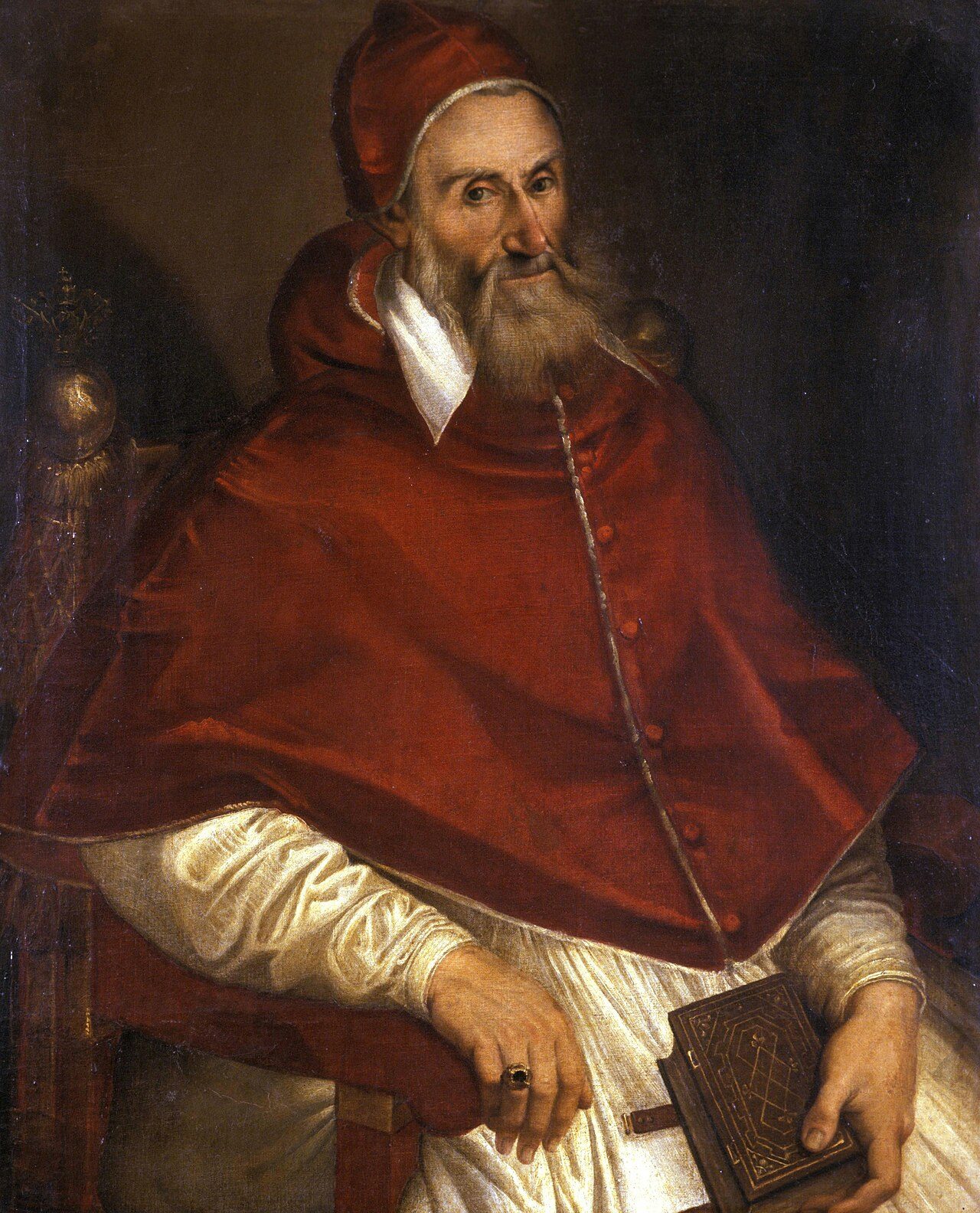
The Gregorian calendar exists because the Julian calendar's year was about 11 minutes too long, drifting the seasons by a day a century — until Pope Gregory XIII deleted ten days in October 1582 and rewrote the leap-year rule.
At a Glance
- The problem
- The Julian year of 365.25 days runs about 11 minutes too long, drifting almost a day per century against the seasons
- The reformer
- Pope Gregory XIII, by the bull Inter gravissimas of February 1582; the scheme was designed by Luigi Lilio and defended by Christopher Clavius
- The ten days
- In the first adopting states, Thursday 4 October 1582 was followed by Friday 15 October 1582
- The new rule
- Century years are leap years only if divisible by 400 — so 2000 was a leap year, but 1700, 1800 and 1900 were not
- The staggered adoption
- Catholic Europe 1582; Protestant German states 1700; Britain and its colonies 1752 (11 days dropped); Russia 1918 and Greece 1923 (13 days dropped)
- The riot story
- The tale of 1752 riots demanding our eleven days back is largely myth: historians have found no evidence of calendar riots
Introduction
The Gregorian calendar is the solar dating system now in general use across the world, and it exists because its predecessor was slowly wrong. The Julian calendar counted the year as 365 and a quarter days; the true solar year is about 11 minutes shorter, so the calendar drifted by almost a day per century against the seasons. In 1582 Pope Gregory XIII corrected it with the bull Inter gravissimas: in the lands that adopted the reform at once, Thursday, October 4, 1582 was followed directly by Friday, October 15.
The reform did two things at once. It deleted ten days to pull the spring equinox back to March 21, its date at the Council of Nicaea in 325, and it changed the leap-year rule so the drift would not quickly return: century years are leap years only if divisible by 400. The result is a year of 365.2425 days, close enough that the seasons now advance by only about one day in 7,700 years, on Britannica's figures.
Background: An Eleven-Minute Error
Julius Caesar introduced the Julian calendar in 46 BCE to replace a Roman calendar that had fallen badly out of step with the sun. Its fix — a leap day every four years — assumed a year of exactly 365.25 days. The solar year more precisely lasts 365 days, 5 hours, 48 minutes and about 45 seconds: more than 11 minutes shorter, as Britannica sets out. Eleven minutes a year is imperceptible in a lifetime; multiplied by sixteen centuries it moved the calendar dates of the seasons by about ten days from their Nicaean position, and by some reckonings the total regression since Caesar reached 14 days.
The drift was not an abstract problem. The Church dated Easter from the spring equinox, fixed by tradition at March 21. As the real equinox slid earlier in the calendar — by Gregory's time it was falling on March 11 — Easter threatened to slide with it, away from the season the Council of Nicaea had intended. Reform proposals circulated for centuries before a pope finally acted, because correcting the calendar meant admitting error, deleting days, and persuading suspicious rival churches and states to follow Rome's lead.
The Reform of 1582
The mathematics of the reform came chiefly from Luigi Lilio, a Calabrian physician and astronomer who died before it was adopted, and from Christopher Clavius, the Jesuit mathematician who refined, explained and defended Lilio's scheme for decades afterward. Gregory promulgated their work in the bull Inter gravissimas, issued in February 1582 and named, in the papal manner, from its opening words. The bull ordered the ten-day correction that October and imposed the new leap-year rule on Catholic Christendom.
The choice of October was practical: it held fewer major feasts to disrupt. In the Papal States, Spain, Portugal and the Polish-Lithuanian Commonwealth, people went to sleep on Thursday, October 4 and woke on Friday, October 15 — the days of the week ran on unbroken; only the dates jumped. The reform also restored January 1 as the beginning of the year in place of the various medieval year-starts, giving the new calendar its familiar shape.
Timeline
- 46 BCE
Julius Caesar introduces the Julian calendar: 365 days with a leap day every four years.
- 325 CE
The Council of Nicaea fixes the framework for dating Easter, with the spring equinox at March 21 — the benchmark the 1582 reform would restore.
- 1576
Luigi Lilio, the reform's principal designer, dies before his scheme is adopted.
- 24 February 1582
Pope Gregory XIII issues the bull Inter gravissimas, proclaiming the reformed calendar.
- October 1582
In the first adopting states, Thursday October 4 is followed by Friday October 15; ten dates are omitted.
- 1700
Most Protestant German states adopt the Gregorian calendar; 1700 is a leap year in Julian lands but not in Gregorian ones, widening the gap to 11 days.
- September 1752
Great Britain and its colonies adopt the reform: September 2 is followed by September 14.
- 1918
Russia adopts the Gregorian calendar for civil use, dropping 13 days.
- 1923
Greece adopts the Gregorian calendar for civil purposes, among the last European states to switch.
Significance: A Calendar Adopted by Confession
Adoption followed the map of Europe's religious divisions. Catholic states switched in 1582 or soon after. Protestant states resisted a pope's calendar for generations — the Protestant German states in 1700, Great Britain and its colonies only in 1752, Sweden in 1753 after a famously botched gradual transition that at one point produced a February 30, in 1712. Orthodox countries held out longest: the Soviet republics adopted the calendar in 1918 and Greece in 1923, by which time they had to drop 13 days. That stagger is why the Russian October Revolution of 1917, dated under the Julian calendar, is commemorated in November.
Britain's delay had a human texture the dates conceal. The Calendar (New Style) Act protected rents, wages and coming-of-age from the jump, ruling that payments fell due by elapsed time, not by the new numbers, and the Treasury extended the tax year rather than lose 11 days of revenue — the origin of the UK tax year beginning on April 6. Beyond Europe the calendar spread with trade and empire: Japan adopted it in 1873 and China in 1912, and it is now the civil standard even in most countries that keep other calendars for religious life.
Myths and disputes
Did mobs riot in 1752 chanting Give us back our eleven days? The story is famous, repeated in textbooks and attached to a Hogarth engraving, but historians who have searched the newspapers, diaries and records of 1752 — notably Robert Poole, in a study titled with the slogan itself — have found no evidence of calendar riots. Complaints and satire existed; a popular uprising over stolen days appears to be a later invention. This page therefore treats the riots as legend, not event.
A second half-myth is that Gregory stole ten days from people's lives. Nobody lived fewer days: the week ran continuously from Thursday to Friday, and only the numbering changed, exactly as the Act of 1750 later arranged in Britain so that no rent or wage was shortened. What genuinely remains disputed is the calendar's future. The Gregorian year still runs about 26 seconds long annually, reformers have proposed everything from a year of 13 equal months to making years divisible by 4,000 common years — a refinement Britannica notes would hold the error to one day in 20,000 years — and several Orthodox churches still keep the Julian calendar for feasts, which is why some Christmas celebrations fall on January 7.
Legacy
The Gregorian calendar is the closest thing humanity has to a shared clock-face: a sixteenth-century papal correction, designed by an Italian physician and a German Jesuit, now used for civil purposes on every continent. Its triumph was not instantaneous but cumulative — each state that switched made the next switch easier, until the calendar of a divided Christendom became, quietly, the world's.
Sources
- Encyclopaedia Britannica — Gregorian calendar
- Royal Museums Greenwich — Calendars from around the world
- HISTORY — New Year's: Eve, Day, Traditions & Resolutions
- Encyclopaedia Britannica — Why Does the New Year Start on January 1?
The facts on this page were checked against these sources on 19 November 2026. The History Trail's permanent pages are researched and written for this site; the live profiles elsewhere on The History Trail are assembled automatically from Wikipedia and Wikidata.
About the Author
Researched and written by the The History Trail Editorial Team — the accountable editorial function behind this site's permanent story pages. The team works from the published sources cited on each page; it does not invent historians, reviewers or credentials, and it corrects errors openly.
Fact Check
Every load-bearing fact on this page traces to one of the sources listed above, and significant claims link to their source in the text. Our checking method is described on the methodology page; errors can be reported via the corrections page.
Sources & Citations
Cite this page as: The History Trail Editorial Team, The History Trail — this article's title, publication and update dates are shown beneath its headline. The full source list appears under Sources above; the site's source standards are on the sources page.