
On This Day
October 2 in History
On 2 October 1836 HMS Beagle returned to England with Charles Darwin aboard, ending the five-year voyage whose fossils and island birds would lead him to the theory of evolution by natural selection. October 2 is also the day Saladin took Jerusalem in 1187, the Warsaw Uprising ended in 1944 and Thurgood Marshall joined the U.S. Supreme Court in 1967.
Choose another date: open the On This Day calendar to browse events, births and deaths for any day of the year.
At a Glance
- The voyage
- 1831–1836 — a surveying expedition around the world aboard HMS Beagle
- The ship's captain
- Robert FitzRoy, who took Darwin as gentleman companion and naturalist
- Key collections
- Fossils of giant extinct mammals in Argentina and birds from the Galapagos Islands
- The key insight
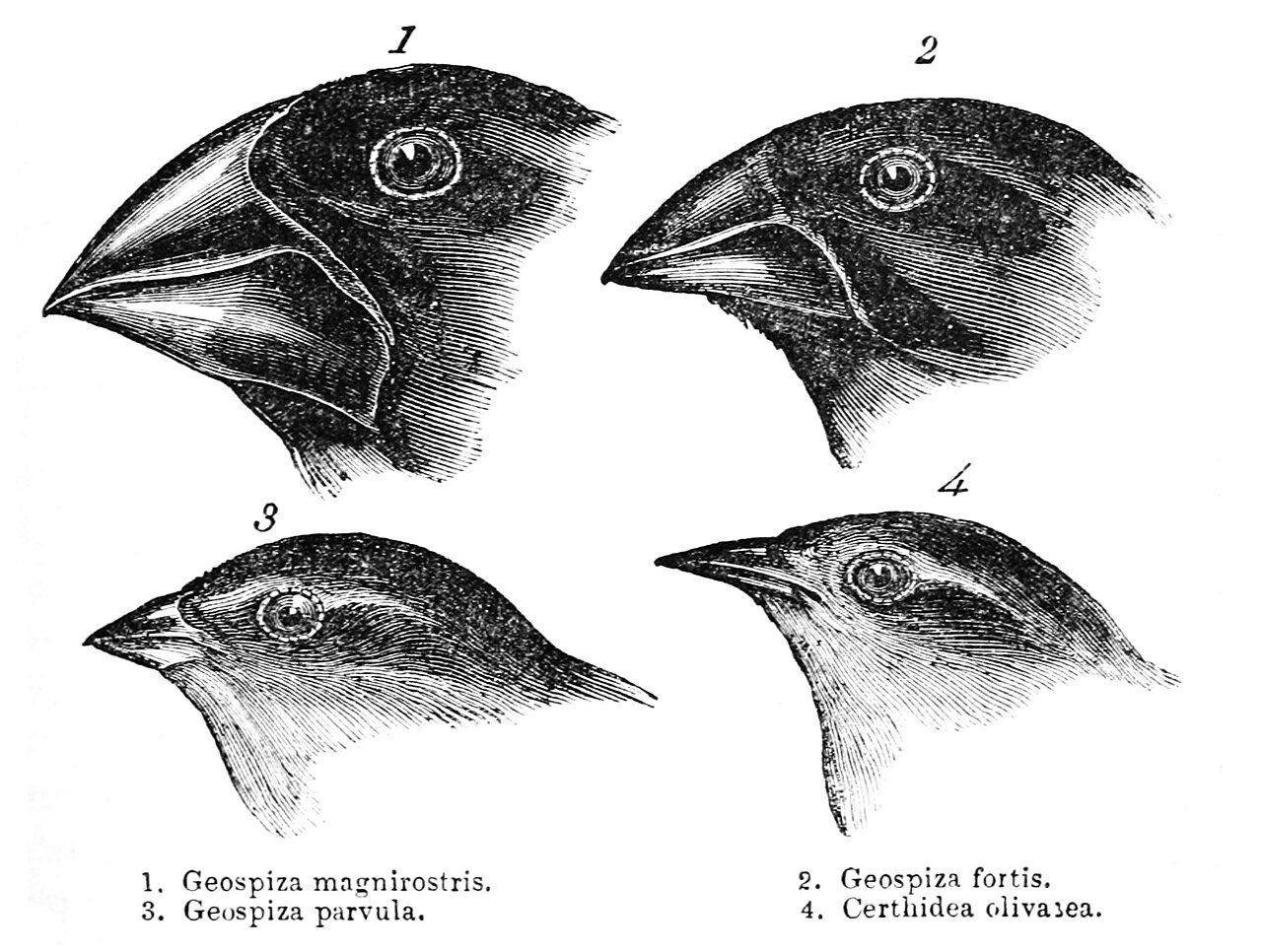
- John Gould showed in 1837 that the Galapagos finches were distinct species found nowhere else
- The outcome
- The evidence gathered led to On the Origin of Species, published in 1859
Events on this day
- 1187Jerusalem capitulates to Saladin after his victory at Hattin, ending 88 years of Crusader rule in the city and prompting the Third Crusade.
- 1780Major John André, the British officer who conspired with Benedict Arnold, is hanged as a spy by the Americans at Tappan, New York.
- 1835The Battle of Gonzales, the first engagement of the Texas Revolution, is fought after Mexican troops try to seize a small cannon from settlers.
- 1836Charles Darwin returns to England aboard HMS Beagle after a five-year voyage around the world — the featured story above.
- 1919President Woodrow Wilson suffers a severe stroke at the White House, leaving him largely incapacitated for the rest of his term.
- 1937The Parsley Massacre begins in the Dominican Republic, as Trujillo's regime orders the killing of Haitians living near the border.
- 1944The Warsaw Uprising ends after 63 days, as the Polish Home Army surrenders to German forces; much of the city is then destroyed.
- 1954Elvis Presley makes his only appearance at the Grand Ole Opry in Nashville — and is politely advised to go back to driving a truck.
- 1967Thurgood Marshall is sworn in as the first Black justice of the United States Supreme Court.
Born on this day
- 1452Richard III — king of England, the last Plantagenet king, killed at Bosworth in 1485.
- 1869Mohandas Gandhi — leader of India's independence movement and pioneer of nonviolent resistance.
- 1879Wallace Stevens — American poet of The Emperor of Ice-Cream and insurance executive by day.
- 1890Groucho Marx — American comedian, the wisecracking centre of the Marx Brothers.
- 1904Graham Greene — English novelist of Brighton Rock and The Quiet American.
- 1904Lal Bahadur Shastri — second prime minister of India, who led the country during the 1965 war with Pakistan.
- 1951Sting — English musician, frontman of the Police and solo artist.
Died on this day
- 1780John André — British major hanged as a spy for his part in Benedict Arnold's plot to surrender West Point.
- 1968Marcel Duchamp — French artist whose readymades, including a urinal exhibited as Fountain, redefined what art could be.
- 1985Rock Hudson — American film star whose death from AIDS-related illness drew worldwide attention to the disease.
- 2017Tom Petty — American rock musician, frontman of the Heartbreakers, dead at 66.
The featured story: Charles Darwin returns to England aboard HMS Beagle, 2 October 1836
When HMS Beagle came home to England on 2 October 1836, she had been away for four years and nine months, and the shy young naturalist aboard her had been transformed by the voyage. Charles Darwin had joined the ship in December 1831, aged twenty-two, as a gentleman companion to Captain Robert FitzRoy and unpaid naturalist on a survey expedition to chart the coasts of South America. He had expected a voyage of two or three years. Instead the Beagle carried him around the world — down the Atlantic coast of South America, around Cape Horn, up the Pacific coast, and home by way of the Galapagos Islands, Tahiti, New Zealand, Australia and the Cape of Good Hope.
Darwin filled the voyage with work. Ashore in Argentina he dug out the fossil bones of enormous extinct mammals, creatures like nothing alive, and wondered why their modern relatives were so much smaller. He rode with gauchos, survived an earthquake in Chile, and watched a volcano erupt. In September and October 1835 the Beagle spent five weeks among the Galapagos Islands, where Darwin collected birds from island to island — including the finches and mockingbirds whose differences between neighbouring islands would later seem to him so telling. He shipped crates of specimens home throughout the voyage, and his letters and fossils had already made his name in London's scientific circles before he returned.
What Darwin did not yet have, when the Beagle anchored in England on 2 October 1836, was his theory. That came afterwards, in the sorting. In January 1837 he presented his collections to the Zoological Society of London, and the ornithologist John Gould, examining the Galapagos birds, reported that the finches Darwin had lumped together as blackbirds, grosbeaks and finches were in fact a closely related group of distinct species, found nowhere else on earth. The mockingbirds, too, differed from island to island. Within months Darwin had opened the first of his private notebooks on the transmutation of species, beginning the twenty years of patient accumulation that preceded publication.
The book that finally appeared, On the Origin of Species, in 1859, changed biology permanently, arguing that species evolve by natural selection from common ancestors. Almost everything in it traces back to the five years that ended on 2 October 1836: the fossils, the island birds, the geographical patterns Darwin had puzzled over at sea. The Beagle's survey was a modest Admiralty enterprise, quickly forgotten by the navy. The return of its naturalist, with his crates and notebooks, turned out to be one of the most consequential homecomings in the history of science.
Why this date matters
October 2 is a day of arrivals and reckonings. Saladin entered Jerusalem on it in 1187, closing one era of the Crusades and opening another. A spy was hanged on it in 1780, a revolution in Texas began on it in 1835, and an uprising in Warsaw was crushed on it in 1944. It is also the birthday of Gandhi, born in 1869, whose method of resistance would undo an empire without an army. But its deepest mark is quieter: a survey ship docking in 1836 with a young naturalist aboard, carrying in his specimen crates the evidence that would reorganise humanity's understanding of life itself.
Sources
- Encyclopaedia Britannica — On This Day: October 2
- HISTORY — Thurgood Marshall Sworn In
- National Archives — This Week in Universal News: Thurgood Marshall Is Sworn In, 1967
- Encyclopaedia Britannica — The Crusades: The Crusader States to 1187
- Encyclopaedia Britannica — Marcel Duchamp
The facts on this page were checked against these sources on 19 November 2026. The History Trail's permanent pages are researched and written for this site; the live profiles elsewhere on The History Trail are assembled automatically from Wikipedia and Wikidata.
About the Author
Researched and written by the The History Trail Editorial Team — the accountable editorial function behind this site's permanent story pages. The team works from the published sources cited on each page; it does not invent historians, reviewers or credentials, and it corrects errors openly.
Fact Check
Every load-bearing fact on this page traces to one of the sources listed above, and significant claims link to their source in the text. Our checking method is described on the methodology page; errors can be reported via the corrections page.
Sources & Citations
Cite this page as: The History Trail Editorial Team, The History Trail — this article's title, publication and update dates are shown beneath its headline. The full source list appears under Sources above; the site's source standards are on the sources page.