
On This Day
November 12 in History
In the night of 12 November 1970 a cyclone drove a wall of water across the Ganges Delta in East Pakistan, present-day Bangladesh, and killed more people than any tropical storm in recorded history — NOAA puts the toll somewhere between 300,000 and 500,000. November 12 is also the day Scott's body was found in the Antarctic, Ellis Island closed and a spacecraft first landed on a comet.
Choose another date: open the On This Day calendar to browse events, births and deaths for any day of the year.
At a Glance
- Landfall
- Night of 12 November 1970, on the coast of East Pakistan (now Bangladesh)
- The killer
- A storm surge, estimated at up to about 10 metres, flooding the low-lying islands of the Ganges Delta
- Death toll
- Estimated at 300,000 to 500,000 (NOAA) — the deadliest tropical cyclone on record; no exact count was possible
- Warnings
- Warnings were issued but many people had no shelter to go to, no way to reach one, or did not heed them (NOAA)
- Worst-hit place
- Tazumuddin, where more than 45 percent of the population of 167,000 was killed, according to NOAA
- Aftermath
- Anger at the central government's slow response fed the movement that, within a year, fought the war that created Bangladesh
Events on this day
- 1330Wallachian forces under Basarab I ambush and defeat the Hungarian army at the Battle of Posada.
- 1799Astronomer Andrew Ellicott watches the Leonids from a ship off Florida — the first recorded meteor shower in North America.
- 1912The bodies of Captain Robert Falcon Scott and his companions are found in their tent on Antarctica's Ross Ice Shelf, eight months after they died returning from the South Pole.
- 1920Italy and the Kingdom of Serbs, Croats and Slovenes sign the Treaty of Rapallo, fixing their Adriatic border.
- 1942The Naval Battle of Guadalcanal begins, the decisive sea fight of the Solomon Islands campaign.
- 1944RAF bombers sink the German battleship Tirpitz near Tromsø in Operation Catechism, killing about 1,000 of her crew.
- 1954Ellis Island, the gateway through which more than 12 million immigrants entered the United States, closes its doors.
- 1970The Bhola cyclone strikes East Pakistan, the deadliest tropical cyclone on record — the featured story above.
- 1991Indonesian troops fire on demonstrators at Santa Cruz cemetery in Dili, East Timor, killing at least 250 people.
- 1996A Saudi airliner and a Kazakh cargo plane collide in mid-air near New Delhi, killing 349 people in the deadliest such collision in history.
- 2001American Airlines Flight 587 crashes into a Queens neighbourhood shortly after leaving New York, killing 265 people.
- 2014The European Space Agency's Philae lander touches down on comet 67P, the first soft landing on a comet's nucleus.
Born on this day
- 1815Elizabeth Cady Stanton — American leader of the women's rights movement and co-organiser of Seneca Falls.
- 1840Auguste Rodin — French sculptor of The Thinker and The Kiss.
- 1929Grace Kelly — American actress who became Princess of Monaco.
- 1945Neil Young — Canadian-American singer-songwriter of Heart of Gold and Rockin' in the Free World.
- 1961Nadia Comăneci — Romanian gymnast who scored the first perfect 10 in Olympic competition.
- 1982Anne Hathaway — American actress of Les Misérables and The Devil Wears Prada.
Died on this day
- 1916Percival Lowell — American astronomer who championed the canals of Mars and predicted Pluto.
- 1939Norman Bethune — Canadian surgeon whose mobile blood-transfusion work in Spain and China made him a hero in China.
- 1994Wilma Rudolph — American sprinter who overcame childhood polio to win three gold medals at the 1960 Olympics.
- 2018Stan Lee — American comics writer who co-created Spider-Man, the X-Men and much of the Marvel universe.
The featured story: the Bhola cyclone, 12 November 1970
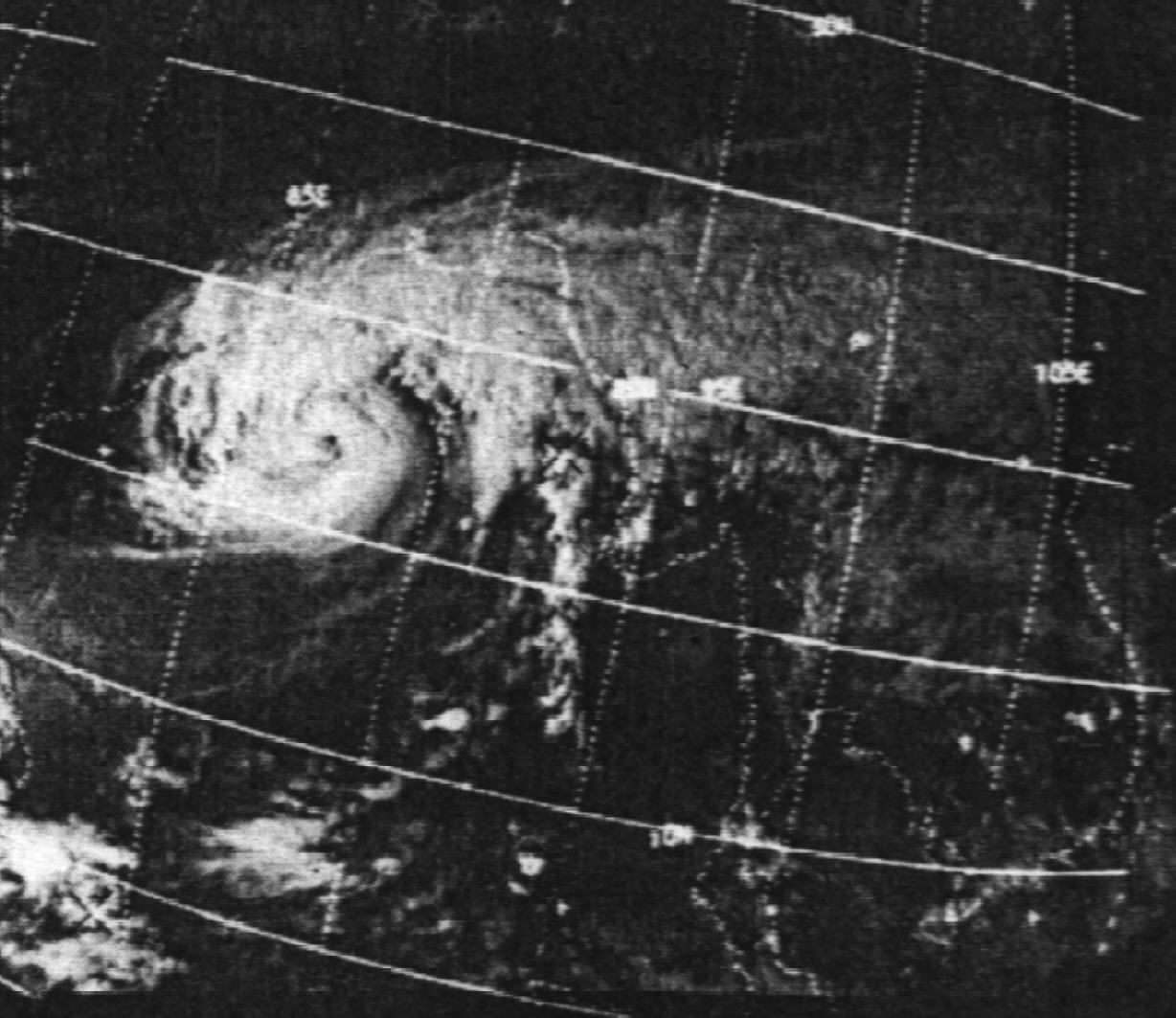
The storm that became Bhola formed in the southern Bay of Bengal, partly from the remnants of a Pacific typhoon that had crossed the Malay Peninsula, and strengthened as it moved north toward the funnel-shaped head of the bay. That geography is the delta's curse: the Ganges, Brahmaputra and Meghna rivers spread across a plain barely above sea level, home to millions of farmers and fishermen, and the narrowing bay piles a cyclone's surge higher as it comes ashore. On the night of 12 November 1970 the surge — estimated at up to about ten metres in places — swept over the offshore islands and the mainland coast, arriving in the dark, at high tide, over villages built of mud and thatch.
The numbers have never been settled, because they could not be: census records for the delta were rudimentary and whole communities vanished. NOAA's assessment, half a century on, is that somewhere between 300,000 and 500,000 people perished, making Bhola the deadliest tropical cyclone on record and one of the deadliest natural disasters of modern times. On Bhola Island, after which the storm is named, and around Tazumuddin, where NOAA records that more than 45 percent of the town's 167,000 people were killed, survivors woke to a landscape of water, wrecked boats and bodies in the trees. Perhaps a million and a half people were left homeless; the rice harvest, livestock and fishing fleets of the delta were destroyed together.
The warnings had existed. Pakistan's meteorological service tracked the storm and issued warnings, and the technology for estimating a cyclone's strength from satellites had just been developed — in the United States. But as NOAA notes, many in the delta never received a warning they could act on, had no cyclone shelter within reach, or had nowhere to go at all. The failure was not only meteorological. East Pakistan's Bengali majority already believed the government in distant West Pakistan treated them as second-class citizens; the slow, grudging relief effort after the cyclone turned that grievance into fury.
Three weeks later, in Pakistan's first free national election, the Bengali Awami League won an overwhelming victory — and was denied power. Within months came civil war, a refugee crisis of millions, and, in December 1971, the independence of Bangladesh. Historians therefore treat Bhola as more than a weather disaster: it was the night the water exposed a broken state, and the storm that, indirectly, redrew the map of South Asia. Bangladesh has since built thousands of cyclone shelters and an early-warning system that has cut later storm tolls from hundreds of thousands to dozens — Bhola's hardest lesson, learned.
Why this date matters
November 12 keeps returning to the sea and to what it takes and gives back. Its featured event is the worst storm surge in recorded history; the same date found Scott's frozen tent in the Antarctic, sank the Tirpitz, closed the immigrant gateway at Ellis Island and put the first lander on a comet. It is a day of thresholds between land and water — deltas, harbours, ice shelves — and of human beings discovering, sometimes far too late, exactly where those thresholds lie.
Sources
- Encyclopaedia Britannica — On This Day: November 12
- HISTORY — What Happened on November 12
- NOAA Atlantic Oceanographic and Meteorological Laboratory — 45th Anniversary of the Bhola Cyclone
- Wikimedia — On This Day feed: November 12
The facts on this page were checked against these sources on 19 November 2026. The History Trail's permanent pages are researched and written for this site; the live profiles elsewhere on The History Trail are assembled automatically from Wikipedia and Wikidata.
About the Author
Researched and written by the The History Trail Editorial Team — the accountable editorial function behind this site's permanent story pages. The team works from the published sources cited on each page; it does not invent historians, reviewers or credentials, and it corrects errors openly.
Fact Check
Every load-bearing fact on this page traces to one of the sources listed above, and significant claims link to their source in the text. Our checking method is described on the methodology page; errors can be reported via the corrections page.
Sources & Citations
Cite this page as: The History Trail Editorial Team, The History Trail — this article's title, publication and update dates are shown beneath its headline. The full source list appears under Sources above; the site's source standards are on the sources page.