
On This Day
January 22 in History
On 22 January 1973 the U.S. Supreme Court decided Roe v. Wade, ruling seven to two that the Constitution protected a woman's right to choose an abortion — a decision that governed American life for nearly fifty years before being overturned in 2022. January 22 is also the day Queen Victoria died, Russian troops fired on the Bloody Sunday procession, and Apple's '1984' advertisement reached the Super Bowl.
Choose another date: open the On This Day calendar to browse events, births and deaths for any day of the year.
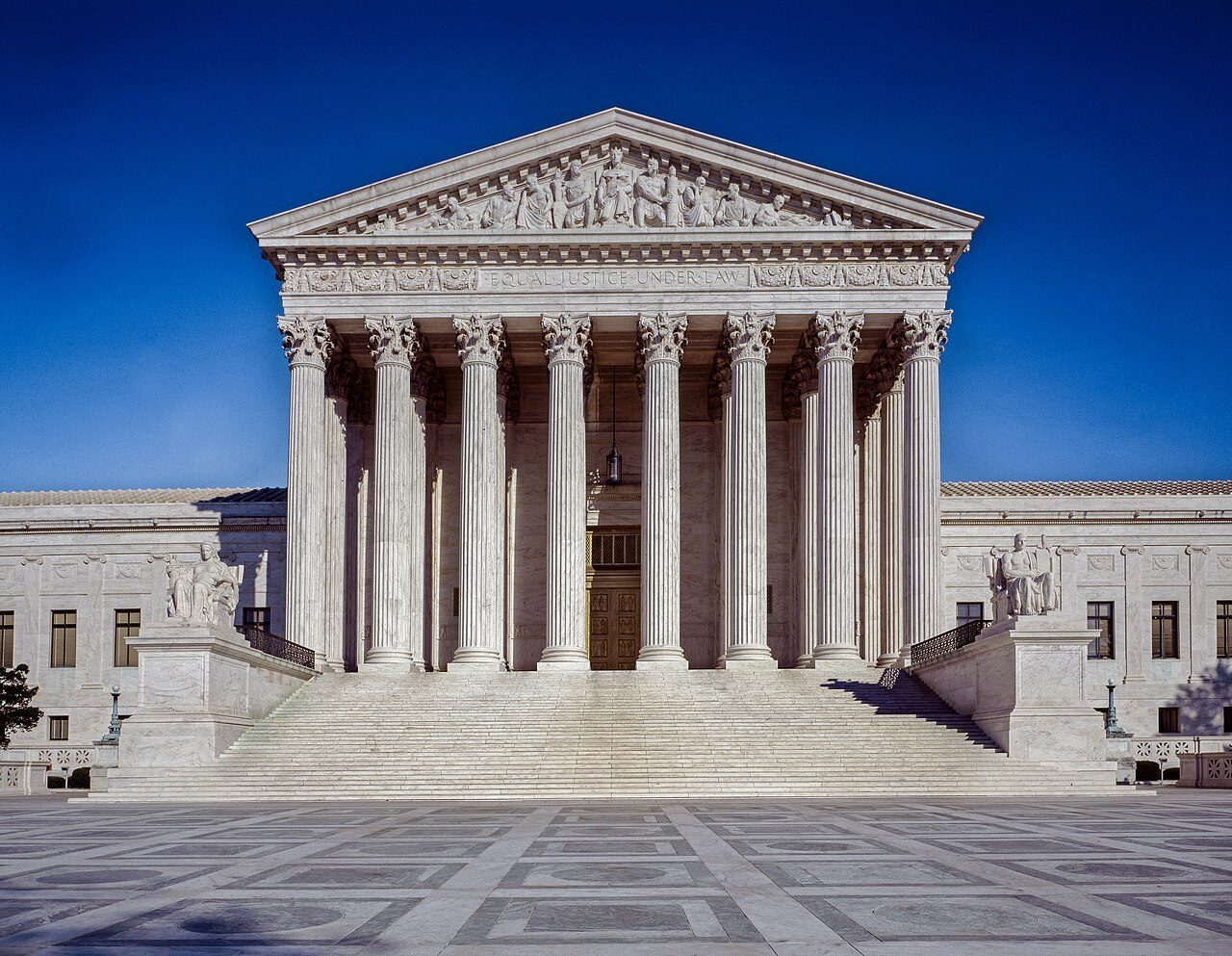
At a Glance
- The case
- 'Jane Roe' (Norma McCorvey) v. Henry Wade, Dallas County district attorney, challenging Texas abortion laws dating from 1854–1907
- Decided
- 22 January 1973, by a 7–2 majority of the U.S. Supreme Court
- Majority opinion
- Written by Justice Harry Blackmun; the right to privacy under the Fourteenth Amendment covers the abortion decision
- The framework
- State power grows with the pregnancy: no interference early on, health regulation in the middle, protection of potential life after viability
- Reshaped
- Planned Parenthood v. Casey (1992) kept the central holding but replaced the trimester framework with viability and 'undue burden'
- Overturned
- Dobbs v. Jackson Women's Health Organization, 24 June 2022, ended Roe and returned abortion law to the states
Events on this day
- 1840British colonists aboard the Aurora arrive at Petone, New Zealand, and found the settlement that becomes Wellington.
- 1879The Dull Knife Outbreak ends as Cheyenne chief Dull Knife and his people are defeated after escaping reservation confinement in Nebraska.
- 1905Bloody Sunday in St. Petersburg: troops fire on a peaceful workers' procession petitioning the tsar, killing and wounding hundreds and shaking faith in Nicholas II.
- 1918Ukraine declares its total independence from Russia, days after the Bolsheviks move towards peace with the Central Powers.
- 1920The Netherlands refuses Allied demands to extradite the former German kaiser, Wilhelm II, who is living in Dutch exile.
- 1973The U.S. Supreme Court decides Roe v. Wade, striking down the Texas abortion ban and legalising abortion nationwide — the featured story above.
- 1980Soviet physicist and dissident Andrei Sakharov is arrested in Moscow after criticising the invasion of Afghanistan, and is exiled to Gorky.
- 1984Apple's '1984' television commercial, directed by Ridley Scott, airs during Super Bowl XVIII and introduces the Macintosh computer.
- 1998Theodore Kaczynski, the 'Unabomber', pleads guilty in Sacramento to the federal charges against him for his 17-year bombing campaign.
- 2003The U.S. Census Bureau reports that Hispanics have become the largest minority group in the United States.
Born on this day
- 1561Francis Bacon — English philosopher and statesman, champion of the scientific method.
- 1788Lord Byron — English Romantic poet, author of Don Juan and Childe Harold's Pilgrimage.
- 1849August Strindberg — Swedish playwright and novelist, a founder of modern theatre.
- 1898Sergei Eisenstein — Soviet film director of Battleship Potemkin, a pioneer of montage.
- 1904George Balanchine — Russian-born choreographer who reshaped American ballet.
- 1931Sam Cooke — American singer, the 'King of Soul', whose voice defined a generation.
Died on this day
- 1901Queen Victoria — Britain's longest-reigning monarch to that date, dead at Osborne House after a reign of 63 years.
- 1973Lyndon B. Johnson — 36th president of the United States, dead in Texas at 64, four years after leaving the White House.
- 2008Heath Ledger — Australian actor, found dead in New York at 28, months after filming his celebrated Joker in The Dark Knight.
- 2018Ursula K. Le Guin — American author of the Earthsea books and The Left Hand of Darkness, dead at 88.
- 2021Hank Aaron — American baseball great who held the home-run record for 33 years, dead at 86.
The featured story: the Supreme Court decides Roe v. Wade, 22 January 1973
On 22 January 1973 the United States Supreme Court handed down one of the most consequential decisions in its history. In Roe v. Wade, by a majority of seven to two, the Court struck down a Texas law that banned abortion except to save the life of the mother, and held that the right to privacy protected by the Fourteenth Amendment was broad enough to cover a woman's decision to end a pregnancy. Because the ruling rested on the Constitution, it overrode the abortion laws of almost every state at a stroke, and abortion became legal across the United States.
The case had begun in Dallas, Texas, in 1970. 'Jane Roe' — the legal pseudonym of Norma McCorvey, a young pregnant woman who wanted an abortion she could not legally obtain — sued the Dallas County district attorney, Henry Wade, arguing that the Texas statutes of 1854 to 1907 were unconstitutional. The case was argued twice before the Supreme Court, in December 1971 and again in October 1972, before the justices were ready to decide it. Justice Harry Blackmun, a former lawyer for the Mayo Clinic who had spent the summer of 1972 researching the medical history of abortion, wrote the majority opinion.
Blackmun's opinion balanced the woman's right against two state interests — protecting her health and protecting potential life — and resolved them with a timetable tied to the stages of pregnancy. In roughly the first third of a pregnancy, the decision was left to the woman and her doctor, and the state could not interfere. In the second stage the state could regulate the procedure in ways reasonably related to maternal health. Once the foetus could survive outside the womb, the state could protect potential life and could even prohibit abortion except where the mother's life or health was at stake. Justices Byron White and William Rehnquist dissented.
For nearly fifty years Roe stood, though it was reshaped in 1992, when Planned Parenthood v. Casey kept the central holding but replaced the trimester timetable with the point of foetal viability and a test of 'undue burden'. The argument Roe started never went away: it reorganised American politics, made Supreme Court appointments into national contests, and was argued over in every election cycle. Then, on 24 June 2022, the Court decided Dobbs v. Jackson Women's Health Organization and overturned Roe outright, returning the question to the states — which is why the decision of 22 January 1973 is still, half a century on, the reference point for both sides of America's longest argument.
Why this date matters
January 22 keeps marking the moment when an old order loses its grip. Victoria's death in 1901 closed the century she had named; Bloody Sunday in 1905 cracked the Russian monarchy's claim to its people's loyalty; Ukraine's declaration in 1918 redrew a map the tsars had held for centuries. In 1973 the day turned legal: a court in Washington rewrote the rights of every American woman, on the very day a former president died in Texas. And in 1984 a one-minute advertisement announced, in Orwell's own year, the machine that would put a screen in every home. Authority — royal, political, technological — is this date's recurring subject.
Sources
- Encyclopaedia Britannica — On This Day: January 22
- HISTORY — What Happened on January 22
- HISTORY — Roe v. Wade: Decision, Summary & Overturned
- The White House (Archives) — A Proclamation on the 50th Anniversary of the Roe v. Wade Decision
The facts on this page were checked against these sources on 19 November 2026. The History Trail's permanent pages are researched and written for this site; the live profiles elsewhere on The History Trail are assembled automatically from Wikipedia and Wikidata.
About the Author
Researched and written by the The History Trail Editorial Team — the accountable editorial function behind this site's permanent story pages. The team works from the published sources cited on each page; it does not invent historians, reviewers or credentials, and it corrects errors openly.
Fact Check
Every load-bearing fact on this page traces to one of the sources listed above, and significant claims link to their source in the text. Our checking method is described on the methodology page; errors can be reported via the corrections page.
Sources & Citations
Cite this page as: The History Trail Editorial Team, The History Trail — this article's title, publication and update dates are shown beneath its headline. The full source list appears under Sources above; the site's source standards are on the sources page.