
On This Day
January 15 in History
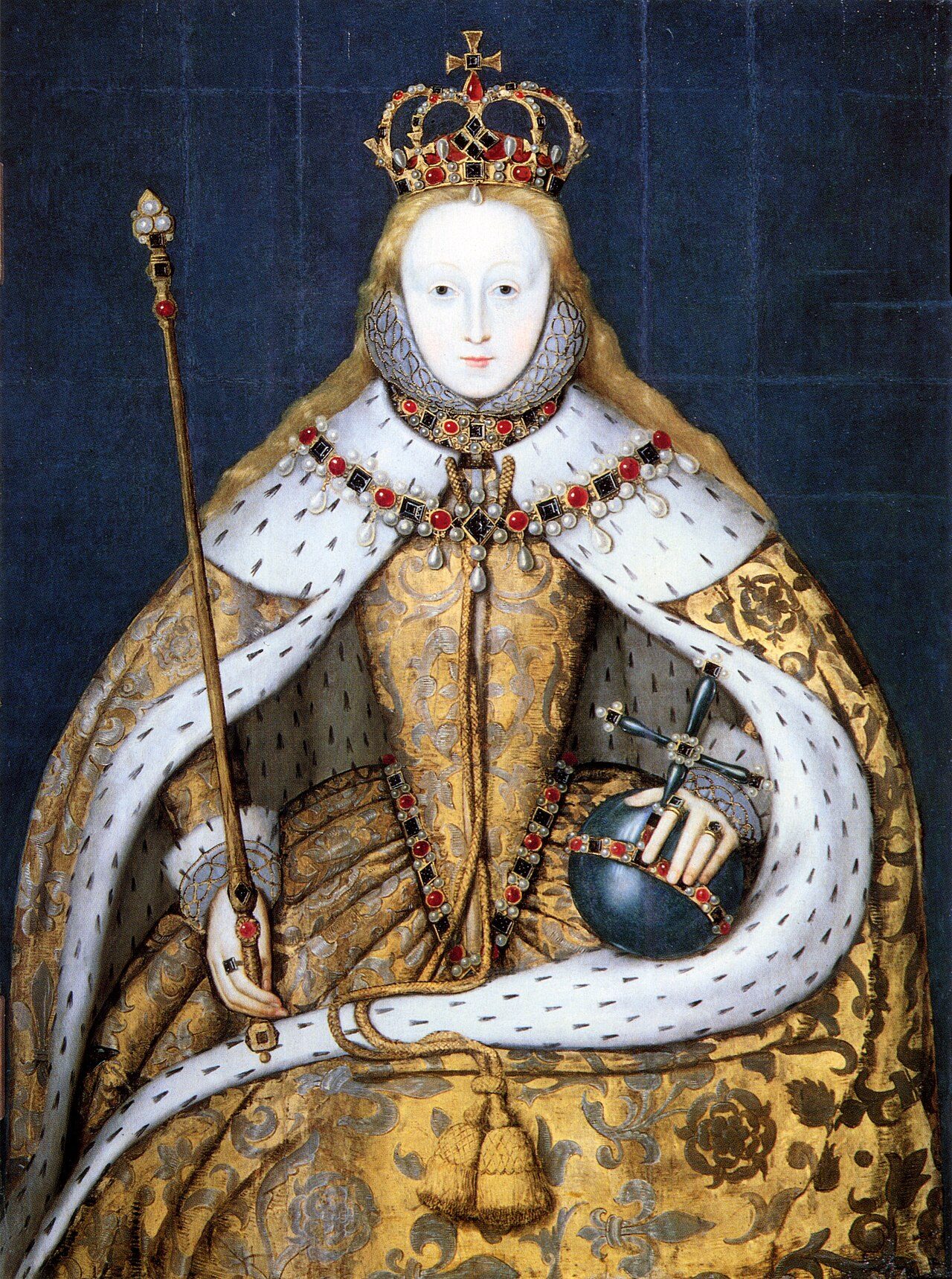
On 15 January 1559 Elizabeth Tudor, aged 25, was crowned queen of England in Westminster Abbey — the start of a 44-year reign that would reshape her country and give an age its name. January 15 is also the day Wikipedia launched, a river of molasses drowned a Boston street, and a pilot landed an airliner on the Hudson River with every soul saved.
Choose another date: open the On This Day calendar to browse events, births and deaths for any day of the year.
At a Glance
- When and where
- 15 January 1559, at Westminster Abbey, London
- The queen
- Elizabeth, 25, daughter of Henry VIII and Anne Boleyn
- The vacancy
- Her half-sister Mary I had died two months earlier, in November 1558
- The date chosen by
- Her astrologer, Dr John Dee, who picked the day as astrologically fortunate
- The officiant
- Owen Oglethorpe, Bishop of Carlisle — the see of Canterbury was vacant and other bishops refused
- A first
- The Gospel was read in English as well as Latin, an early sign of the Protestant settlement to come
- The reign ahead
- 44 years, until 1603 — the Elizabethan age of Shakespeare, Drake and the defeat of the Armada
Events on this day
- 1559Elizabeth I is crowned queen of England at Westminster Abbey — the featured story above.
- 1759The British Museum opens to the public in London, the first national public museum in the world.
- 1777Vermont declares itself an independent republic, breaking from both Britain and New York; it joins the Union in 1791.
- 1870Thomas Nast's cartoon in Harper's Weekly fixes the donkey as the symbol of the U.S. Democratic Party.
- 1919A storage tank bursts in Boston and a wave of molasses floods the North End, killing 21 people.
- 1919Revolutionaries Rosa Luxemburg and Karl Liebknecht are murdered in Berlin after the crushing of the Spartacist uprising.
- 1967The Green Bay Packers beat the Kansas City Chiefs 35–10 in the first Super Bowl.
- 1972Don McLean's 'American Pie' reaches number one in the United States, where it stays for four weeks.
- 1974Happy Days premieres on American television, selling a nostalgic 1950s to a restless 1970s.
- 2001Wikipedia launches — a free encyclopedia anyone can edit, which grows into the largest reference work ever made.
- 2009Captain Chesley Sullenberger lands US Airways Flight 1549 on the Hudson River; all 155 aboard survive — the 'Miracle on the Hudson'.
Born on this day
- 1622Molière — French playwright of Tartuffe and The Misanthrope, the master of comic theatre.
- 1809Pierre-Joseph Proudhon — French philosopher who declared 'property is theft' and founded anarchist thought.
- 1842Mary MacKillop — Australian nun and teacher, founder of schools across the outback and Australia's first saint.
- 1918Gamal Abdel Nasser — Egyptian leader who seized the Suez Canal in 1956 and defined Arab nationalism.
- 1929Martin Luther King Jr. — American Baptist minister and leader of the civil rights movement, assassinated in 1968.
Died on this day
- 1896Mathew Brady — American photographer whose studio recorded the Civil War and its generation of leaders.
- 1919Rosa Luxemburg — Polish-German revolutionary and theorist, murdered in Berlin at 47.
- 1919Karl Liebknecht — German socialist leader, murdered alongside Luxemburg after the Spartacist uprising.
- 2018Dolores O'Riordan — Irish singer of the Cranberries, voice of 'Zombie' and 'Linger', dead at 46.
- 2019Carol Channing — American stage star, Broadway's original Dolly Levi in Hello, Dolly!, dead at 97.
The featured story: Elizabeth I is crowned queen of England, 15 January 1559
When Mary I died in November 1558, England changed queens, religions and direction in a single day. Her successor was her 25-year-old half-sister Elizabeth, daughter of Henry VIII and Anne Boleyn — a young woman who had survived disgrace, house arrest and a spell in the Tower, and who inherited a kingdom that was bankrupt, divided in faith and fresh from losing Calais, its last foothold in France. Two months later, on 15 January 1559, she was crowned at Westminster Abbey, in a ceremony carefully staged to launch a reign that would last 44 years.
Even the date was a calculated choice: Elizabeth's astrologer, Dr John Dee, was asked to select an auspicious day, and chose the 15th. The ceremony itself exposed the religious tightrope she would walk. The Archbishopric of Canterbury stood vacant and several bishops refused to officiate, so the crown was placed on her head by Owen Oglethorpe, the Bishop of Carlisle. And in a quiet signal of the settlement to come, the Gospel was read in English as well as Latin — the first time English had sounded in that part of the rite, as Westminster Abbey's own account notes.
The coronation was theatre with a purpose. Elizabeth processed through London the day before, past pageants that cast her as a Protestant Deborah delivering her people, and she played her part to perfection, telling the crowds she would be 'as good unto you as ever queen was unto her people'. Within months her parliament passed the Acts of Supremacy and Uniformity, founding the Church of England settlement that — amended but recognisable — still stands. The pageantry was not decoration; for a queen whose legitimacy Catholics denied, it was statecraft.
What followed is why the day matters. The reign that began that January morning saw England defeat the Spanish Armada in 1588, plant its first American colonies, and produce Shakespeare, Marlowe and Spenser — the 'Elizabethan age' is simply named after the woman crowned that day. She never married, never named an heir in public, and out-reigned every expectation of 1559, dying in 1603 as the last Tudor monarch. Few coronations have opened a longer or more consequential reign. She had come to the throne knowing exactly how precarious it was: her mother had been executed, she herself had been declared illegitimate and later imprisoned on suspicion of treason, and half of Europe considered her cousin Mary, Queen of Scots the rightful queen. The 44 years that followed were her long answer to all of it.
Why this date matters
January 15 has a taste for foundings and first drafts of new worlds: a queen crowned in 1559, a museum opened in 1759, a republic declared in Vermont in 1777, an encyclopedia launched in 2001. Set against them are the day's warnings — a flood of molasses in Boston's streets, two revolutionaries murdered in Berlin, an airliner gliding down to a river. Beginnings dominate, though: more than most dates, this one is where long stories start.
Sources
- Encyclopaedia Britannica — On This Day: January 15
- HISTORY — What Happened on January 15
- Westminster Abbey — Elizabeth I's Coronation (Teachers' Notes)
- HISTORY — Elizabeth Crowned Queen of England
The facts on this page were checked against these sources on 19 November 2026. The History Trail's permanent pages are researched and written for this site; the live profiles elsewhere on The History Trail are assembled automatically from Wikipedia and Wikidata.
About the Author
Researched and written by the The History Trail Editorial Team — the accountable editorial function behind this site's permanent story pages. The team works from the published sources cited on each page; it does not invent historians, reviewers or credentials, and it corrects errors openly.
Fact Check
Every load-bearing fact on this page traces to one of the sources listed above, and significant claims link to their source in the text. Our checking method is described on the methodology page; errors can be reported via the corrections page.
Sources & Citations
Cite this page as: The History Trail Editorial Team, The History Trail — this article's title, publication and update dates are shown beneath its headline. The full source list appears under Sources above; the site's source standards are on the sources page.