
On This Day
April 9 in History
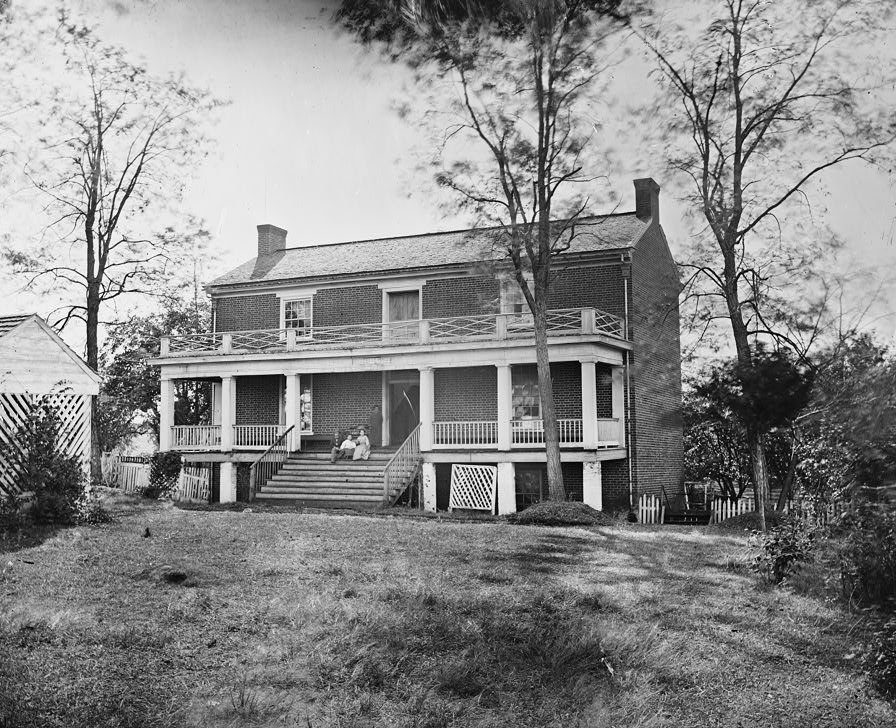
On 9 April 1865 Robert E. Lee surrendered the Army of Northern Virginia to Ulysses S. Grant at Appomattox Court House, effectively ending the American Civil War. April 9 is also the day Marian Anderson sang at the Lincoln Memorial in 1939 and Germany invaded Norway and Denmark in 1940.
Choose another date: open the On This Day calendar to browse events, births and deaths for any day of the year.
At a Glance
- The place
- The McLean House, Appomattox Court House, Virginia
- The armies
- Lee's Army of Northern Virginia, surrounded and starving after fleeing Richmond
- The terms
- Confederates paroled to go home; officers kept sidearms and horses; 25,000 Union rations issued to Lee's men
- The date
- Palm Sunday, 9 April 1865
- The sequel
- Other Confederate armies surrendered through May and June 1865; Lincoln was assassinated on 14 April
- The meaning
- The effective end of the Civil War and of slavery in the United States
Events on this day
- 1859Samuel Clemens, the future Mark Twain, receives his steamboat pilot's licence on the Mississippi River.
- 1865Robert E. Lee surrenders the Army of Northern Virginia to Ulysses S. Grant at Appomattox Court House, effectively ending the Civil War — the featured story above.
- 1939Barred by the Daughters of the American Revolution from Constitution Hall, contralto Marian Anderson sings instead before 75,000 people at the Lincoln Memorial.
- 1940Germany invades Norway and Denmark, opening the Scandinavian campaign of the Second World War; Denmark surrenders within hours.
- 1942American and Filipino forces on Bataan surrender to Japan, the largest surrender in U.S. history; the Bataan Death March follows.
- 1945Pastor and theologian Dietrich Bonhoeffer is hanged at Flossenbürg concentration camp for his part in the German resistance to Hitler.
- 1947The Journey of Reconciliation, the first interracial 'Freedom Ride', sets out from Washington, D.C., to test desegregation rulings in the South.
- 1959NASA introduces the Mercury Seven, America's first astronauts, to the public in Washington.
- 1962Rita Moreno wins the Academy Award for West Side Story, becoming the first Hispanic woman to win an Oscar.
- 1968Martin Luther King Jr. is buried in Atlanta after a funeral at Ebenezer Baptist Church attended by tens of thousands.
Born on this day
- 1821Charles Baudelaire — French poet of Les Fleurs du mal, the defining voice of modern urban poetry.
- 1887Florence Price — American composer, the first Black woman to have a symphony performed by a major orchestra.
- 1977Gerard Way — American musician, frontman of My Chemical Romance, and comics writer.
- 1999Lil Nas X — American rapper and singer whose 'Old Town Road' became the longest-running number one in chart history.
Died on this day
- 1626Francis Bacon — English philosopher and statesman, the prophet of the scientific method, dead at 65.
- 1940Mrs Patrick Campbell — English stage actress, the first Eliza Doolittle in Pygmalion, dead in France at 75.
- 1945Dietrich Bonhoeffer — German pastor and theologian, hanged by the Nazis at Flossenbürg at 39.
The featured story: Lee surrenders at Appomattox, 9 April 1865
On Palm Sunday, 9 April 1865, in the parlour of Wilmer McLean's house in the village of Appomattox Court House, Virginia, Robert E. Lee surrendered the Army of Northern Virginia to Ulysses S. Grant. As Encyclopaedia Britannica's account of Appomattox puts it, that surrender, of the Confederacy's most famous army, was the effective end of the American Civil War: other Confederate forces remained in the field, but after Lee, the rest was a matter of weeks.
Lee's army had abandoned Richmond and Petersburg a week earlier and fled west, starving, hoping to reach supplies and turn south to join Joseph Johnston's army in North Carolina. Union cavalry got in front of it, captured its supply trains, and on the morning of 9 April Lee's last attack broke through only to find solid infantry behind the cavalry. 'There is nothing left for me to do but go and see General Grant,' Lee said, 'and I would rather die a thousand deaths.' He sent out a flag of truce and asked for the meeting he had refused two days before.
The terms Grant wrote that afternoon were deliberately generous. Confederate officers and men would be paroled and allowed to go home, 'not to be disturbed by United States authority so long as they observe their paroles'; officers kept their sidearms and horses, and men who owned horses could take them for the spring planting. When Lee mentioned that his men were hungry, Grant sent over 25,000 rations. As the Smithsonian's National Museum of American History emphasises in its account of the surrender, the parlour's contents were scattered as souvenirs, and the two generals' restraint became the war's last and best statement about what the peace was supposed to be.
Five days later Abraham Lincoln was shot, and the work of reunion he had promised, 'with malice toward none', passed into harder hands. Other Confederate armies surrendered through May and June, and the last Confederate general, Stand Watie, laid down his arms on 23 June. But Appomattox remained the war's symbolic end: 620,000 or more dead behind it, four million people freed from slavery within the peace it began, and a surrender conducted, famously, as Grant wrote, in a spirit meant to let the men in grey simply go home.
Why this date matters
April 9 is the Civil War's bookend and, by strange recurrence, a date on which wars keep ending and beginning: Bataan falls in 1942 on the same morning Germany invades two neutral countries in 1940, while a pastor hangs in 1945 for resisting the regime that started it all. Against that stands the date's other thread, dignity asserted in public: a singer refused a hall sings to 75,000 at Lincoln's feet in 1939, a pilot's licence in 1859 starts Mark Twain, and in 1959 seven test pilots are presented as the men who would answer the space age. Few dates hold surrender and defiance in such balance, and fewer still show what a surrender can be at its best: at Appomattox the winning general fed the losing army and sent its men home with their horses, and that restraint, as much as the victory, is what the date is remembered for.
Sources
- Encyclopaedia Britannica — Appomattox Court House
- Smithsonian National Museum of American History — The Surrender at Appomattox Court House
- Encyclopaedia Britannica — On This Day: April 9
- HISTORY — What Happened on April 9
The facts on this page were checked against these sources on 19 November 2026. The History Trail's permanent pages are researched and written for this site; the live profiles elsewhere on The History Trail are assembled automatically from Wikipedia and Wikidata.
About the Author
Researched and written by the The History Trail Editorial Team — the accountable editorial function behind this site's permanent story pages. The team works from the published sources cited on each page; it does not invent historians, reviewers or credentials, and it corrects errors openly.
Fact Check
Every load-bearing fact on this page traces to one of the sources listed above, and significant claims link to their source in the text. Our checking method is described on the methodology page; errors can be reported via the corrections page.
Sources & Citations
Cite this page as: The History Trail Editorial Team, The History Trail — this article's title, publication and update dates are shown beneath its headline. The full source list appears under Sources above; the site's source standards are on the sources page.