
On This Day
April 1 in History
On 1 April 1999 Canada divided the Northwest Territories to create Nunavut — 'our land' — a self-governing territory for the Inuit of the eastern Arctic, the first change to Canada's map in fifty years. April 1 is also the day the RAF was formed, Apple Computer was founded and Iran was proclaimed an Islamic republic.
Choose another date: open the On This Day calendar to browse events, births and deaths for any day of the year.
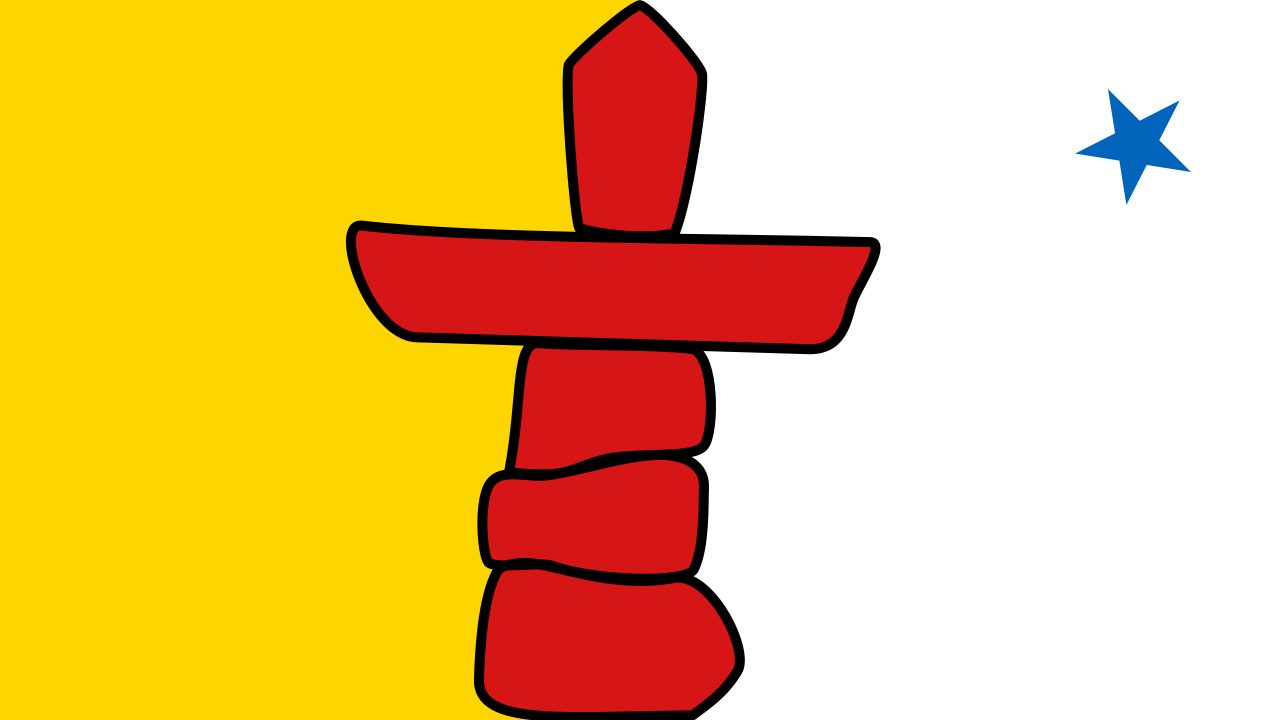
At a Glance
- The agreement
- The Nunavut Land Claims Agreement, the largest Indigenous land claim in Canadian history
- The vote
- A 1992 plebiscite approved dividing the Northwest Territories
- The land
- Inuit control of more than 135,000 square miles (350,000 sq km), plus monetary compensation
- The capital
- Iqaluit, on Baffin Island
- The people
- Inuit make up roughly 86 percent of the territory's population
- The government
- A consensus legislature with no political parties
Events on this day
- 1918The Royal Air Force is formed in Britain, merging the Royal Flying Corps and the Royal Naval Air Service into the world's first independent air force.
- 1924Adolf Hitler is sentenced to five years in prison for the Beer Hall Putsch; he serves nine months and writes much of Mein Kampf behind bars.
- 1930Josef von Sternberg's film The Blue Angel is released in Germany, making a star of Marlene Dietrich.
- 1945American troops land on Okinawa, beginning the largest and bloodiest battle of the Pacific War's final phase.
- 1954The United States Air Force Academy is created by an act of Congress; it is later built at Colorado Springs, Colorado.
- 1976Steve Jobs, Steve Wozniak and Ronald Wayne found Apple Computer Inc. in California, a company that becomes one of the world's largest technology firms.
- 1979After a national referendum, Ayatollah Ruhollah Khomeini proclaims Iran an Islamic republic, completing the Iranian Revolution.
- 1999Canada divides the Northwest Territories to create Nunavut, a self-governing Inuit homeland in the eastern Arctic — the featured story above.
- 2001The Netherlands becomes the first country in the world to open civil marriage to same-sex couples.
- 2001A U.S. spy plane collides with a Chinese fighter jet over the South China Sea; the Chinese pilot is killed and the American crew is detained on Hainan Island for 11 days.
- 2004Google launches Gmail, the free email service that grows past one billion users within a few years.
Born on this day
- 1578William Harvey — English physician who demonstrated the circulation of the blood.
- 1755Anthelme Brillat-Savarin — French lawyer and author of The Physiology of Taste, the classic of gastronomy.
- 1776Sophie Germain — French mathematician who made pioneering contributions to number theory and elasticity.
- 1815Otto von Bismarck — the statesman who unified Germany and became the German Empire's first chancellor.
- 1873Sergey Rachmaninoff — Russian composer and piano virtuoso, famed for his piano concertos and the Rhapsody on a Theme of Paganini.
- 1942Samuel R. Delany — American science-fiction author and critic.
Died on this day
- 1917Scott Joplin — American composer, the 'King of Ragtime', dead in a New York mental institution at 48.
- 1984Marvin Gaye — American soul singer of What's Going On, shot and killed by his father in Los Angeles, a day before his 45th birthday.
- 1993Alan Kulwicki — NASCAR champion driver, killed in a plane crash near Bristol, Tennessee, at 38.
- 2018Steven Bochco — American television producer who co-created Hill Street Blues, L.A. Law and NYPD Blue, dead at 74.
Why this date matters
April 1 is famous for jokes, but its real history is a catalogue of new beginnings taken seriously: an air force in 1918, a computer company in a California garage in 1976, a republic proclaimed in Tehran in 1979, legal marriage equality in 2001, and in 1999 an entire territory, negotiated into existence and handed to its Indigenous people on the day the map changed. Even its darker entries, a dictator sentenced in 1924 and a battle joined in 1945, are beginnings of a kind. No date in the calendar starts more things, in jest and in earnest, than this one.
Sources
- Encyclopaedia Britannica — On This Day: April 1
- HISTORY — What Happened on April 1
- Wikipedia — Nunavut
- Wikipedia — April 1
The facts on this page were checked against these sources on 19 November 2026. The History Trail's permanent pages are researched and written for this site; the live profiles elsewhere on The History Trail are assembled automatically from Wikipedia and Wikidata.
About the Author
Researched and written by the The History Trail Editorial Team — the accountable editorial function behind this site's permanent story pages. The team works from the published sources cited on each page; it does not invent historians, reviewers or credentials, and it corrects errors openly.
Fact Check
Every load-bearing fact on this page traces to one of the sources listed above, and significant claims link to their source in the text. Our checking method is described on the methodology page; errors can be reported via the corrections page.
Sources & Citations
Cite this page as: The History Trail Editorial Team, The History Trail — this article's title, publication and update dates are shown beneath its headline. The full source list appears under Sources above; the site's source standards are on the sources page.