
Things
Emerald
Emerald, the green variety of beryl, was first mined in the desert mountains of Egypt, in workings that may date to 500 BC and that tradition attaches to Cleopatra, whose passion for the stone is a matter of record. Egypt supplied the ancient world for two thousand years - until the sixteenth century, when Spain seized the far richer mines of Colombia and Colombian stones reset the standard for emerald everywhere.
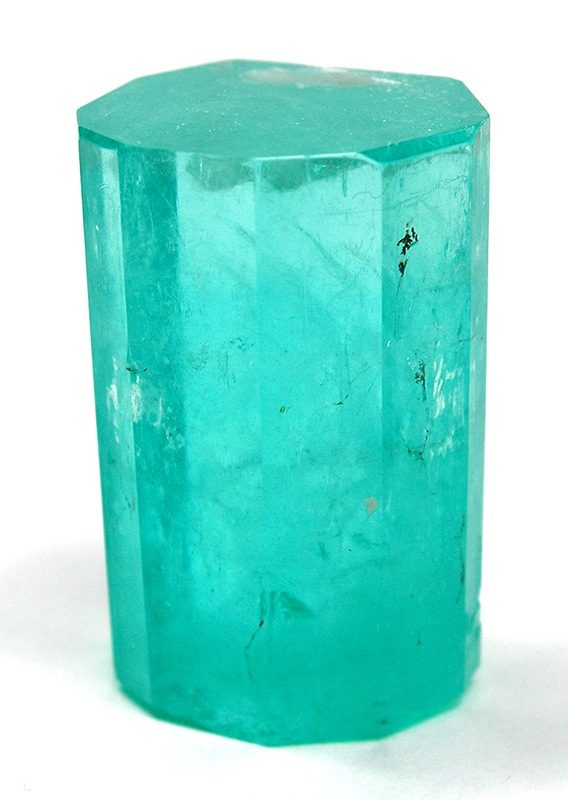
At a Glance
- What it is
- The green variety of the mineral beryl; the most famous member of the beryl family, GIA notes
- The name
- From the ancient Greek smaragdus, 'green' - the Romans called the stones smaragdi and Egypt's mining district Mons Smaragdus, Emerald Mountain
- The first mines
- Egypt, from at least 330 BC into the 1700s on GIA's dating; worked intermittently perhaps from 500 BC, busiest under Rome
- Cleopatra
- Known to have had a passion for emerald and used it in her royal adornments, GIA records; claims that she owned all the mines are later tradition
- The turning point
- Colombia: emeralds in greater abundance and better quality from the 1520s; seized by Spain in the 16th century, they reached Europe's and Asia's courts
- Famous stones
- Gachala (858 carats, Smithsonian), Duke of Devonshire (1,383.93 carats, on loan in London), Patricia (632 carats, New York), Hooker (75.47 carats, Smithsonian)
Introduction
Emerald is the green variety of the mineral beryl, and its green has been prized longer than almost any colour in the gem world. Rome's Pliny the Elder, describing emerald in his Natural History in the first century AD, gave the verdict the Gemological Institute of America still quotes: 'nothing greens greener'. For more than fifteen hundred years the world's emeralds came from one place - the desert mountains of Egypt - and the most famous name attached to them is a queen's: Cleopatra, whom GIA records as known to have had a passion for emerald and to have used it in her royal adornments.
Then, in the sixteenth century, Spanish invaders in South America seized a second emerald world: the mines of what is now Colombia, at Chivor and Muzo, whose stones proved larger, greener and finer than Egypt's. Colombian emeralds flooded the courts of Europe and the treasuries of Mughal India, and Colombia has been the standard for emerald ever since. The great stones of that trade now sit in museum cases - in Washington, London and New York.
Egypt: The First Emerald Mines
The first known emerald mines were in Egypt. GIA's history gives their span as dating from at least 330 BC into the 1700s, and its reading list on the ancient mines adds the archaeology: the workings near Sikait, in the Eastern Desert between Luxor and the Red Sea port of Berenike, may have been worked intermittently as early as 500 BC, though the main period of mining began under the Romans about 30 BC. The Romans called the district Mons Smaragdus - Emerald Mountain - and the stones smaragdi, from the Greek word for green from which 'emerald' itself descends.
The Egyptian stones were modest - often opaque to translucent, worn as polished crystals and beads - but for the whole ancient and medieval world they were effectively the only emeralds there were. Egypt remained the major source until, as GIA puts it, emeralds were discovered in greater abundance and better quality in the 1520s in the New World. The desert mines were then lost for centuries, until the French explorer Frederic Cailliaud rediscovered them in 1817; later attempts to work them again all failed.
Cleopatra's Stone - Tradition and Evidence
No name is bound to emerald as Cleopatra's is. GIA states the documented core plainly: Cleopatra was known to have a passion for emerald, and used it in her royal adornments. The Egyptian mines are still called 'Cleopatra's mines' in the literature - a GIA journal article on the deposits of Upper Egypt uses exactly that phrase.
This page keeps the boundary where the sources put it. That Cleopatra loved and wore emeralds is the attested tradition, recorded by GIA; the stronger stories in popular retellings - that she claimed all of Egypt's mines as her personal property, or presented emeralds carved with her portrait to dignitaries - are later embroidery, not documented in the sources consulted here, and are flagged on this page as tradition rather than fact.
Colombia: Conquest and a New Emerald World
Emeralds from what is now Colombia were part of the plunder when sixteenth-century Spanish explorers invaded the New World, GIA records - and the invaders were latecomers. The Incas had already used emeralds in jewellery and religious ceremonies for 500 years, and the mining peoples of the Colombian Andes - above all the Muzo, whose name the greatest mine still bears - had worked the deposits long before any European saw them. Spanish forces reached Chivor in the 1530s and fought their way into Muzo's territory in the decades that followed; the mines passed under colonial control, and their output changed the world's emerald trade.
The Spanish, GIA notes, treasured gold and silver far more than gems, and traded emeralds for precious metals - and in doing so opened the eyes of European and Asian royalty to the stone. Colombian emeralds crossed the Atlantic in quantity and travelled onward to Ottoman and Mughal treasuries; many of the great historic emeralds of India are Colombian stones. Muzo and Chivor, in Boyaca, remain the names by which emerald quality is judged.
Timeline
- c. 500 BC
Egyptian emerald mines near Sikait, between the Nile and the Red Sea, are worked intermittently, archaeological evidence suggests - the ancient world's first emerald source.
- 51-30 BC
Cleopatra, last Ptolemaic ruler of Egypt, is known for her passion for emerald and uses it in her royal adornments, GIA records.
- 1st century AD
Pliny the Elder describes emerald in his Natural History: 'nothing greens greener'.
- 1520s
Emeralds are found in far greater abundance and better quality in the New World, in present-day Colombia, ending Egypt's long primacy.
- 16th century
Spanish invaders seize the Colombian emerald districts of Chivor and Muzo; the stones are traded for gold and silver and reach the courts of Europe and Asia.
- 1817
The French explorer Frederic Cailliaud rediscovers Egypt's lost ancient emerald mines in the Eastern Desert.
- 1831
The great uncut crystal later called the Duke of Devonshire Emerald, 1,383.93 carats from Muzo, comes into the hands of the 6th Duke of Devonshire; it is now on long-term loan to the Natural History Museum in London.
- 1920
The Patricia Emerald, a 632-carat crystal, is found at Chivor; it is now in the American Museum of Natural History in New York.
- 1967
The 858-carat Gachala Emerald crystal is found at the Vega de San Juan mine in Colombia; Harry Winston donates it to the Smithsonian in 1969.
Significance
Emerald's significance is geographical: its history is the story of two sources, and of the moment one replaced the other. For two thousand years emerald meant Egypt - small, pale stones from desert pits, dignified by antiquity and by Cleopatra's name. Colombia did not merely add supply; it reset the standard of what an emerald should be, a saturated green against which even the ancient stones look modest. Few gems carry so clean a before-and-after, dated to a single generation of conquest.
The stone also maps the sixteenth century's new world economy in miniature. Mined by Andean peoples, seized by Spain, traded by merchants who preferred gold, the emerald ended in Mughal treasuries and European crowns. The famous individual stones are the surviving documents of that trade, which is why museums now hold so many of them.
Myths and disputes
Did Cleopatra own Egypt's emerald mines? The claim that she claimed all the mines for herself, and the tales of portrait-carved emeralds given to ambassadors, are popular tradition rather than documented fact; the sources consulted here, including GIA, support the passion and the royal use, not the property claim. This page therefore presents the Cleopatra association as tradition attached to a real, attested love of the stone.
Emerald also carried the usual cargo of ancient belief, which GIA records as legend and this page repeats only as such: that emerald placed under the tongue let its wearer foresee the future, that it revealed truth, protected against evil spells and was believed to cure diseases such as cholera and malaria. None of this is evidence about the stone; all of it is evidence about the people who valued it.
Legacy
Emerald's legacy is kept, above all, in museums. In Washington, the Smithsonian's National Gem Collection holds a Colombian emerald treasury: the 858-carat uncut Gachala crystal of 1967; the 37.82-carat Chalk Emerald from the Maharani of Baroda's necklace; and the 75.47-carat Hooker Emerald, a Colombian stone that passed through the hands of an Ottoman sultan before Janet Annenberg Hooker gave it to the nation. In London, the Duke of Devonshire Emerald - 1,383.93 uncut carats from Muzo - rests in the Natural History Museum, and in New York the Patricia Emerald keeps Chivor's name at the American Museum of Natural History.
Between them, those stones tell the whole story on this page: Egypt's priority, Cleopatra's name, Spain's conquest, Colombia's supremacy - and the modern instinct to end a great gem's journey not in a vault or a crown, but in a public case, in front of the green that Pliny thought nothing could out-green.
Sources
- Gemological Institute of America - Emerald History and Lore
- Gemological Institute of America - Historical Reading List: The Ancient Emerald Mines of Egypt
- Gemological Institute of America - Emeralds and Green Beryls of Upper Egypt (Gems & Gemology)
- Smithsonian National Museum of Natural History - Gachala Emerald
The facts on this page were checked against these sources on 19 November 2026. The History Trail's permanent pages are researched and written for this site; the live profiles elsewhere on The History Trail are assembled automatically from Wikipedia and Wikidata.
About the Author
Researched and written by the The History Trail Editorial Team — the accountable editorial function behind this site's permanent story pages. The team works from the published sources cited on each page; it does not invent historians, reviewers or credentials, and it corrects errors openly.
Fact Check
Every load-bearing fact on this page traces to one of the sources listed above, and significant claims link to their source in the text. Our checking method is described on the methodology page; errors can be reported via the corrections page.
Sources & Citations
Cite this page as: The History Trail Editorial Team, The History Trail — this article's title, publication and update dates are shown beneath its headline. The full source list appears under Sources above; the site's source standards are on the sources page.