
Things
The Shawshank Redemption
The Shawshank Redemption is a 1994 American prison drama directed by Frank Darabont from Stephen King's 1982 novella Rita Hayworth and Shawshank Redemption. It disappointed at the box office on release, earning about $16 million in its first run against a $25 million budget, then reversed its fortunes on home video, cable television and internet-era polls to become one of the most widely loved films ever made.
At a Glance
- Source
- Stephen King's novella Rita Hayworth and Shawshank Redemption, published in the collection Different Seasons (1982)
- Director
- Frank Darabont, who bought the film rights from King in 1987 for $5,000 and wrote and directed the film
- Release
- Premiered at Toronto on 10 September 1994; released in the United States on 23 September 1994 by Columbia Pictures
- Cast
- Tim Robbins as Andy Dufresne and Morgan Freeman as Ellis 'Red' Redding
- First box office
- About $16 million in its initial theatrical run against a $25 million budget; $73.3 million in total after re-release and international takings
- Second life
- Top video rental of 1995 after Warner Home Video shipped over 320,000 rental copies; shown regularly on TNT from 1997
- Honours
- Seven Academy Award nominations, including Best Picture, with no wins; selected for the US National Film Registry in 2015
Introduction
In the film's fiction, banker Andy Dufresne is sentenced to life at Shawshank State Penitentiary for murders he says he did not commit, and over two decades forms a friendship with fellow prisoner Red that carries both men towards an escape and a reunion. That story is King's invention and Darabont's adaptation of it. What is documented, and remarkable, is the film's own history: few major releases have failed so plainly in cinemas and then climbed so far in public affection.
The British Film Institute describes a film that flopped in 1994 but came to sit at number one on the IMDb Top 250, the internet's most consulted user-voted film list. This page follows the BFI in treating that ranking as what it is - the result of a specific, named poll - not a settled verdict on the greatest film ever made.
From King's Novella to Darabont's Film
King published Rita Hayworth and Shawshank Redemption in Different Seasons in 1982, a collection of four novellas that showed a writer famous for horror working in a realist register; the story is subtitled Hope Springs Eternal. Darabont, a young screenwriter who had already adapted King, bought the film rights in 1987 for $5,000, under King's arrangement letting promising new filmmakers option his short fiction cheaply. Development did not begin in earnest for five years, until Darabont wrote his screenplay and Castle Rock Entertainment agreed to finance the film at $25 million.
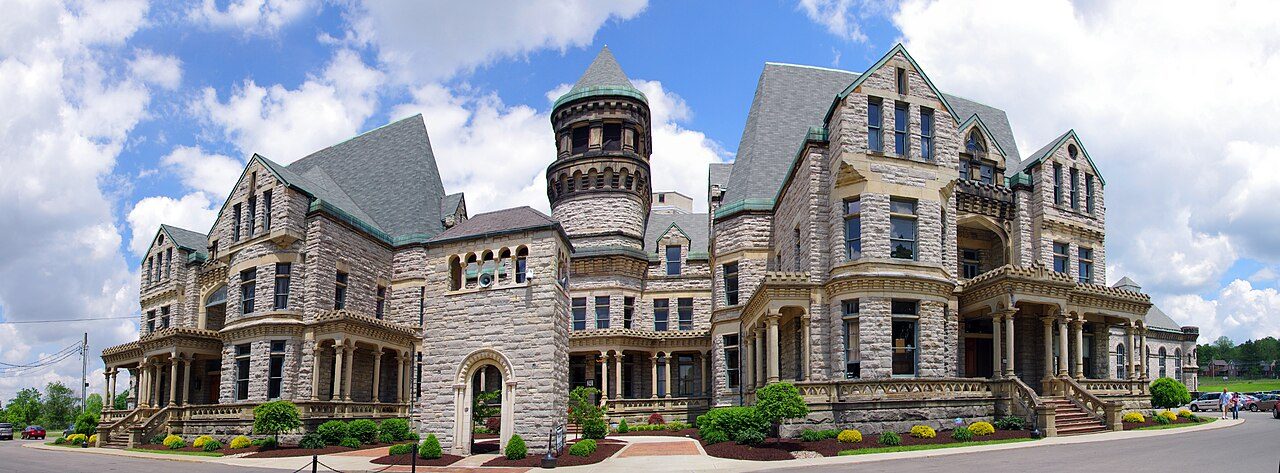
Production centred on a real prison. The Ohio State Reformatory in Mansfield, Ohio - built between 1886 and 1910, opened in 1896 and closed by federal court order in 1990 - stood in for Shawshank, supplying exteriors and many interiors; the facing cell interiors Darabont wanted were built as sets elsewhere in Mansfield. Filming took place in the summer of 1993, with Roger Deakins as cinematographer and Thomas Newman composing the score.
Release: Acclaim Without an Audience
The film premiered at Toronto on 10 September 1994 and opened in the United States on 23 September, expanding slowly. Reviews were largely favourable, but ticket sales did not follow: its initial run earned about $16 million in North America against a $25 million budget. Explanations rehearsed ever since include competition in a season that also produced Forrest Gump and Pulp Fiction, the difficulty of selling a prison drama, the near-absence of women from the cast, and a title audiences found hard to remember.
Awards season brought a second chance. The film received seven nominations at the 67th Academy Awards, including Best Picture, and won none - Forrest Gump took Best Picture. A re-release after the nominations, combined with international takings, lifted its total box office to $73.3 million. By ordinary Hollywood arithmetic, the story should have ended there.
The Second Life: Video, Cable and the Internet
Instead, the audience arrived by other doors. Despite the theatrical result, Warner Home Video shipped more than 320,000 rental copies in the United States in 1995 - a strikingly large shipment for a box-office disappointment - and on the strength of word of mouth and its Oscar nominations the film became the most rented video of 1995. A Wall Street Journal assessment in 2014, based on studio margins, estimated the film had by then made about $100 million across box office, home media and television licensing, with home video alone accounting for roughly $80 million, according to Warner Bros. Home Entertainment executive Jeff Baker as quoted in that report.
Television compounded the effect. After Turner Broadcasting acquired Castle Rock, TNT began showing the film regularly from June 1997, turning a missed theatrical release into a shared viewing habit. The internet then gave that habit a scoreboard: as the BFI recounts, Shawshank settled at or near the top of the IMDb Top 250, passing The Godfather to take first place in 2008, where it has remained in IMDb's user voting. In Britain, a 2015 YouGov poll named it the country's favourite film; the BFI's analysis found it the only title in the top 15 of every age group - first choice of none, liked by all.
Timeline
- 1982
Stephen King publishes Rita Hayworth and Shawshank Redemption in his novella collection Different Seasons.
- 1987
Frank Darabont buys the film rights from King for $5,000.
- Summer 1993
Filming takes place in Mansfield, Ohio, centred on the closed Ohio State Reformatory.
- 10 September 1994
The film premieres at the Toronto International Film Festival.
- 23 September 1994
United States release; the initial theatrical run earns about $16 million against a $25 million budget.
- 1995
Seven Academy Award nominations and a re-release lift the total gross to $73.3 million; the film becomes the top video rental of 1995.
- 1997
Regular broadcasts begin on the TNT network, building a large cable audience.
- 2008
The film takes the number one position on IMDb's user-voted Top 250, passing The Godfather.
- 2014
The Academy marks the film's 20th anniversary with a special screening in Beverly Hills.
- 2015
The Library of Congress selects the film for the National Film Registry; a YouGov poll names it Britain's favourite film.
Significance
Shawshank's significance is industrial as much as artistic: it is the clearest case of a film whose commercial life was decided after the cinema run, by rental video, cable repetition and online recommendation, just as those channels were becoming dominant. Studios learned that a theatrical disappointment with strong word of mouth was an asset, not a write-off.
The Library of Congress gave the film its institutional verdict in 2015, selecting it for the National Film Registry as culturally, historically or aesthetically significant; Darabont responded that he could think of no greater honour. The American Film Institute had already placed it at number 72 on the 2007 edition of its 100 Years... 100 Movies list - ahead, notably, of both Forrest Gump and Pulp Fiction, the films that had overshadowed it in 1994.
Questions readers ask
Is it the greatest film ever made? That depends entirely on who is asked, and this page does not present any poll as fact. On IMDb's Top 250, a self-selecting user vote, it has stood first since 2008. Empire readers voted it the greatest film of all time in a 2006 poll and the best film of the 1990s in another; YouGov's representative 2015 survey made it Britain's favourite film. Critics' polls tell a different story: the film does not lead the BFI's Sight and Sound critics' poll, the decennial survey usually treated as the critics' benchmark. The honest summary is that Shawshank is the most consistently loved film in audience voting, which is a fact about audiences, not a final ranking of cinema.
Did it really fail in 1994? In cinemas, yes, on its first run - about $16 million against a $25 million budget is a disappointment by any measure. The $73.3 million figure often quoted includes the post-nomination re-release and international receipts, and the film's real profits came later, from video and television, as the 2014 Wall Street Journal estimate shows. Both figures are true; they describe different stages of one long release.
Is Shawshank a real prison? No. Shawshank State Penitentiary is King's fictional Maine institution. The building on screen is the Ohio State Reformatory in Mansfield, Ohio, preserved after closure in 1990 and now open for tours, where the film's role in saving the building from demolition is part of its own history.
Legacy
The film's legacy is the reversal itself. A title once cited as unmarketable became shorthand for hope held over long years - and its release history came to mirror its theme so neatly that the parallel is now part of how the film is taught and written about. The Reformatory it helped save has become a place of pilgrimage, with anniversary celebrations in Mansfield thirty years on.
It also stands as a caution against opening-weekend arithmetic. Judged in October 1994, Shawshank was a flop; judged across the video, cable and internet decades that followed, it became one of its studio's most valuable library titles. The film did not change; the audience, given time and other ways to watch, changed its verdict.
Sources
- British Film Institute - How The Shawshank Redemption became the internet's favourite film
- TheWrap - 'Ghostbusters,' 'Shawshank Redemption' Added to National Registry of Film
- Library of Congress, via Chino Kino - Library of Congress announces 25 additions to the National Film Registry for 2015
- Current Magazine - At 30, 'The Shawshank Redemption' is Still Beloved By Many
The facts on this page were checked against these sources on 19 November 2026. The History Trail's permanent pages are researched and written for this site; the live profiles elsewhere on The History Trail are assembled automatically from Wikipedia and Wikidata.
About the Author
Researched and written by the The History Trail Editorial Team — the accountable editorial function behind this site's permanent story pages. The team works from the published sources cited on each page; it does not invent historians, reviewers or credentials, and it corrects errors openly.
Fact Check
Every load-bearing fact on this page traces to one of the sources listed above, and significant claims link to their source in the text. Our checking method is described on the methodology page; errors can be reported via the corrections page.
Sources & Citations
Cite this page as: The History Trail Editorial Team, The History Trail — this article's title, publication and update dates are shown beneath its headline. The full source list appears under Sources above; the site's source standards are on the sources page.