
Things
Sunflower
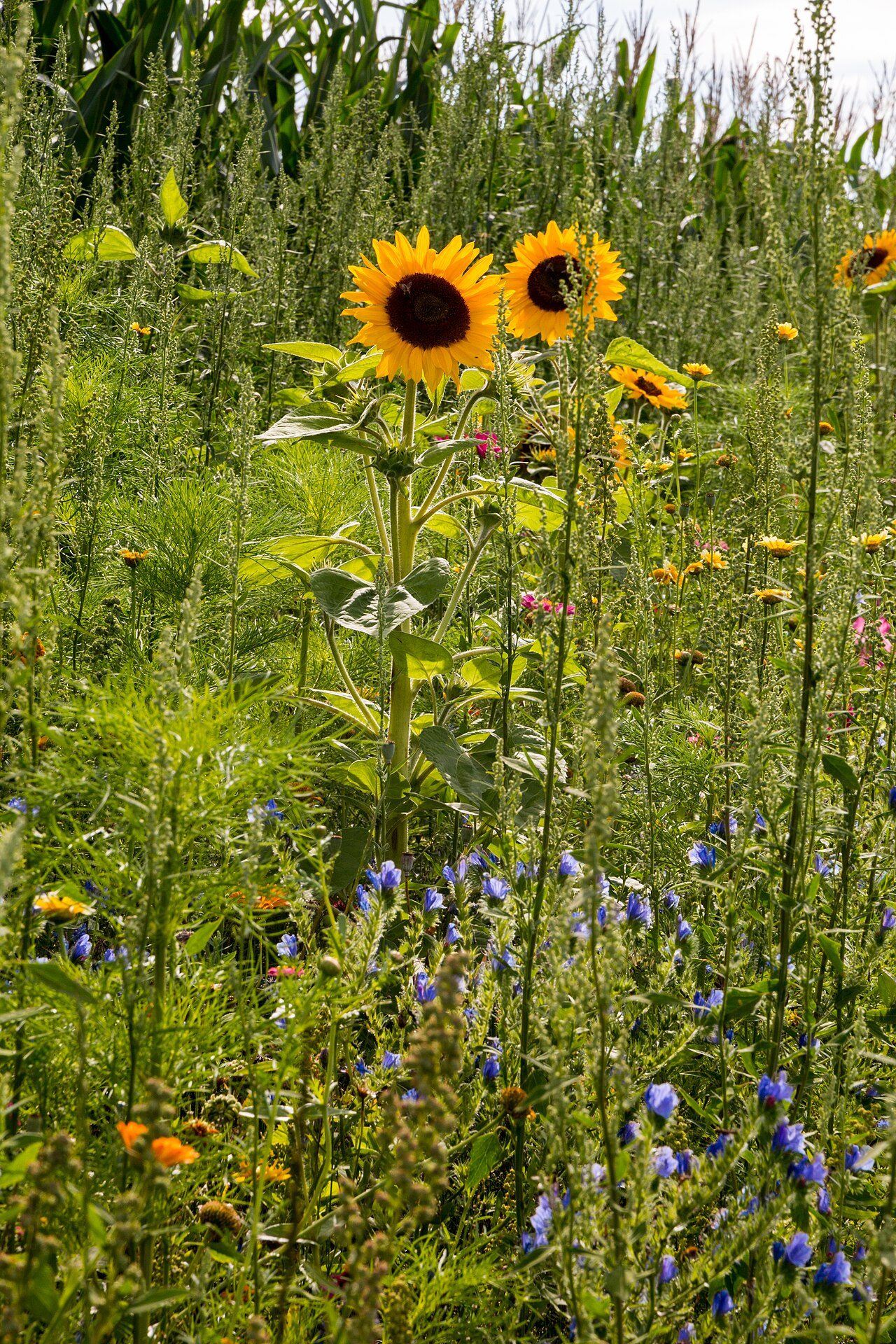
The sunflower (Helianthus annuus) is a North American plant, domesticated by Indigenous peoples over 5,000 years ago, carried to Europe in the 1500s as a garden novelty, and transformed in Russia and Ukraine - where Orthodox Lent rules favoured its unlisted oil - into one of the world's great oilseed crops. It is now the national flower of Ukraine.
At a Glance
- What it is
- Helianthus annuus, an annual of the daisy family (Asteraceae), grown worldwide for its edible seeds and the oil pressed from them
- Where it began
- North America - one of the few major crops domesticated entirely there; Kew dates its domestication by Native American peoples to over 5,000 years ago
- The name
- Linnaeus named it Helianthus annuus in Species Plantarum (1753), from the Greek helios (sun) and anthos (flower)
- To Europe
- Spanish explorers carried seed to Europe as early as 1510, where it was grown for two centuries mainly as a garden novelty
- The oilseed turn
- In Russia and Ukraine, Orthodox Lent rules banned listed oils but not the new sunflower; commercial pressing followed, and by 1880 some 150,000 hectares were planted, mainly in Ukraine and the Caucasus
- The breeder
- Vasily Pustovoit (1886-1972) raised seed oil content from about 28 percent to over 50 percent, making the modern oilseed crop
- Today
- The national flower of Ukraine (Kew); Ukraine and Russia together produce more than half the world's sunflower seed and have exported 70-80 percent of world sunflower oil exports
Introduction
Few crops have travelled as far, or come home as changed, as the sunflower. It is one of the very few major crops domesticated entirely in North America, where Indigenous peoples bred a branching wild plant with many small heads into the single-stemmed, large-seeded flower we know. Carried to Europe in the sixteenth century as a garden curiosity, it found its fortune in the east: in Russia and Ukraine, where church fasting rules made its oil precious, breeders turned it into one of the world's great oilseed crops. Improved seeds then crossed the Atlantic back with emigrants, completing a circle of some 5,000 years.
Kew dates the first domestication to more than 5,000 years ago, by Native American peoples. Today the sunflower is the national flower of Ukraine, and Ukraine and Russia together have in recent decades produced more than half of the world's sunflower seed - a North American plant at the centre of an Eastern European economy.
Domestication in North America
The wild sunflower is a plant of open, disturbed ground across central North America, branching freely and carrying many small flower heads. Domestication meant reversing that habit: selecting, generation by generation, for a single unbranched stem topped by one large head, with bigger seeds that stayed in the head until harvest. Archaeological finds of enlarged sunflower seeds in eastern North America - including material from Tennessee dated to around 2300 BCE - show the fully domesticated form was established thousands of years ago, as part of what archaeologists call the Eastern Agricultural Complex, alongside squash, goosefoot and other native crops.
By the time Europeans arrived, cultivated sunflowers were widespread. The University of Arkansas Extension notes that explorers found the single-headed form being grown by Native American peoples everywhere they looked; seeds were eaten, ground into meal for breads and cakes, and pressed or boiled for oil used in food, on skin and hair, and in ceremony. In Mexico, the Aztec and Otomi peoples used the flower as a symbol of their sun gods, a connection Kew also records.
The Atlantic Crossing: A Garden Novelty
Spanish explorers carried sunflower seed back to Europe as early as 1510, and the plant was growing in the botanic garden of Madrid soon after - as a novelty, not a crop. For two centuries Europe admired it more than it used it: a spectacular American ornament, described in herbals (Rembert Dodoens gave the first clear European account in 1568) and formally named Helianthus annuus by Linnaeus in his Species Plantarum of 1753, from the Greek helios and anthos, sun and flower. Its potential as an oilseed for northern latitudes went largely unnoticed in the west.
The plant's one great European journey eastward is traditionally credited to Peter the Great, who is said to have taken seed from the Netherlands back to Russia at the end of the seventeenth century. Whether or not the tsar personally carried it, Russia is where the sunflower stopped being an ornament.
Russia, Lent and the Making of an Oilseed
The sunflower's rise, as the University of Arkansas account puts it, was due to religion. The Russian Orthodox Church enforced strict fasting rules during Lent and Advent, forbidding most cooking oils because they were named in the old prohibitions. The sunflower, a recent arrival, appeared on no list. Farmers in Russia and Ukraine therefore grew it for the oil its seeds could be pressed into during the fasting seasons, and by the early nineteenth century commercial oil pressing was under way. By 1880, sunflower was grown on some 150,000 hectares, mainly in Ukraine and the Caucasus, for edible oil.
Russian and Ukrainian growers then did the scientific work. They separated the crop into two lines - oilseed types with small, oil-rich black seeds, and confectionery types with large striped seeds for eating - and the Soviet breeder Vasily Pustovoit, working from the 1920s until his death in 1972, raised the oil content of seed from about 28 percent to over 50 percent, the single most important advance in the crop's history. In the 1880s, Ukrainian and Russian Mennonite emigrants carried the improved seed to the northern Great Plains of the United States and Canada: the sunflower came home as a finished crop. Hybrid breeding after the 1960s spread the Russian cultivars worldwide.
Timeline
- c. 3000 BCE and earlier
Indigenous peoples of North America domesticate the sunflower, selecting for a single stem, one large head and bigger seeds; Kew dates domestication to over 5,000 years ago.
- c. 2300 BCE
Fully domesticated sunflower seeds are present in Tennessee, among the earliest clear evidence in the eastern United States.
- 1510
Spanish explorers carry sunflower seed to Europe; the plant is grown in Madrid as a garden novelty.
- Early 1800s
In Russia and Ukraine, where Orthodox Lent rules ban listed oils but not the unlisted sunflower, farmers expand plantings and commercial oil pressing begins.
- 1880
Some 150,000 hectares of sunflower are under cultivation, mainly in Ukraine and the Caucasus, grown for edible oil.
- 1880s
Ukrainian and Russian Mennonite emigrants bring improved oilseed varieties to the northern Great Plains, returning the crop to North America.
- 1920s-1972
Breeder Vasily Pustovoit raises seed oil content from about 28 percent to over 50 percent, transforming the sunflower into a world oilseed.
- 1986
After the Chernobyl disaster, sunflowers are planted in clean-up work for their ability to draw contaminants from soil and water - a use Kew also records at Fukushima.
- 2022
After Russia's full-scale invasion, the sunflower - Ukraine's national flower - becomes a global symbol of Ukrainian solidarity, planted and displayed worldwide.
Significance
The sunflower's significance is the scale of what followed from a fasting rule and a breeding programme. Sunflower oil is now, in the University of Arkansas account, the fourth most important crop oil in the world, behind palm, soybean and canola. Its geography remains strikingly lopsided: Macquarie University's plant profile notes that Ukraine and Russia between them have exported some 70 to 80 percent of the world's sunflower oil exports, so that when war closed Black Sea shipping in 2022, cooking-oil prices rose on other continents - a North American domesticate whose supply the world had come to depend on two countries to provide.
It is also a rare documented case of a crop being improved on one continent and re-imported by its continent of origin. The United States, where the plant was domesticated, built its commercial sunflower industry largely on Russian-bred varieties brought by immigrants and, after 1960, on Soviet cultivars.
Myths and disputes
Where exactly was the sunflower first domesticated? The question is genuinely disputed, and this page does not pretend otherwise. Finds reported from San Andres in Tabasco, Mexico, have been used to argue for a Mexican domestication around 2600 BCE, while the oldest fully domesticated seeds in the United States come from Tennessee. Genetic studies, however, indicate that cultivated sunflowers descend from wild populations of the Great Plains, pointing to a single domestication in central North America. The honest summary is that the plant is North American, that Indigenous peoples had spread and improved it across the continent long before Europeans arrived, and that the precise first hearth is still argued over.
Do sunflowers follow the sun? Only the young ones. Kew notes that immature buds track the sun from east to west, but mature flower heads stay facing east - the postcard image of a field turning through the day is, for a flowering crop, a myth.
Legacy
The sunflower's legacy is written in three landscapes: the Indigenous fields where it was first bred, the Ukrainian and Russian steppe - grassland much like the prairies it came from - where it became an industrial crop, and the gardens of the whole world, where it remains the most recognisable of flowers. Since 2022 its image has carried a further meaning, as Ukraine's national flower and an emblem of resistance and solidarity far beyond agriculture.
A plant that began as one of North America's first domesticates thus ended up feeding the world from the far side of the Atlantic. Its history is a reminder that crops belong to no single nation for long: they belong to whoever selects, breeds and plants them next.
Sources
- Royal Botanic Gardens, Kew - Sunflower: Helianthus annuus
- University of Arkansas System Division of Agriculture - Sunflowers
- Macquarie University - Sunflowers, Helianthus annuus (Daisy family)
- SUNY Geneseo (Biology LibreTexts) - Sunflower: Helianthus annuus
- PROTA (PlantUse) - Helianthus annuus
The facts on this page were checked against these sources on 19 November 2026. The History Trail's permanent pages are researched and written for this site; the live profiles elsewhere on The History Trail are assembled automatically from Wikipedia and Wikidata.
About the Author
Researched and written by the The History Trail Editorial Team — the accountable editorial function behind this site's permanent story pages. The team works from the published sources cited on each page; it does not invent historians, reviewers or credentials, and it corrects errors openly.
Fact Check
Every load-bearing fact on this page traces to one of the sources listed above, and significant claims link to their source in the text. Our checking method is described on the methodology page; errors can be reported via the corrections page.
Sources & Citations
Cite this page as: The History Trail Editorial Team, The History Trail — this article's title, publication and update dates are shown beneath its headline. The full source list appears under Sources above; the site's source standards are on the sources page.