
Things
Tuberculosis
Romanticised as the poet's disease and feared as the white plague, tuberculosis was proven bacterial on one Berlin evening in 1882 — then made curable, then, astonishingly, a global emergency again a century later.
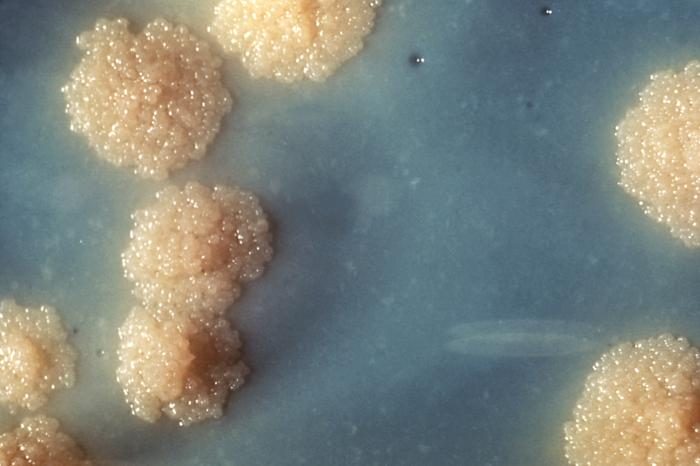
At a Glance
- Cause
- The bacterium Mycobacterium tuberculosis
- Main site
- The lungs; it can also affect kidneys, brain, spine and other organs
- Bacillus identified
- 24 March 1882, by Robert Koch in Berlin
- Spread
- Through the air, when people with TB cough, sneeze or spit (WHO)
- First vaccine
- BCG, first used in a human in 1921
- First effective antibiotic
- Streptomycin, isolated 1943–1944
- Global burden, 2025 (WHO)
- An estimated 10.6 million cases and 1.13 million deaths
Introduction
Few diseases have been given as many names, or carried as much meaning, as tuberculosis. The Greeks called it phthisis, a wasting away. English speakers knew it as consumption, because the body seemed to be consumed from within; as scrofula when it swelled the glands of the neck; as the white plague when it filled nineteenth-century cities with pale, coughing dead. It killed poets and mill workers alike, and for a long time its slowness was mistaken for a kind of refinement — the romantic disease of Keats, Chopin and the Brontës.
The World Health Organization today describes tuberculosis plainly: an infectious disease caused by bacteria that most often affects the lungs and spreads through the air when people with the disease cough, sneeze or spit. Behind that plain sentence lies one of the great detective stories of medicine — an ancient bacterium, a single evening's lecture in Berlin in 1882 that proved its existence, and a century-long struggle in which cure became possible yet the disease, uniquely, was declared a global emergency more than a hundred years after its cause was found.
Background
Tuberculosis is genuinely ancient: its traces appear in Egyptian mummies and in spinal deformities painted in tomb art, and Hippocrates described phthisis as the most widespread disease of his age. What nobody knew was whether it was inherited, a miasma, a degeneration of the tissues — or contagious. Nineteenth-century experiments by Jean-Antoine Villemin showed that material from a tuberculous lesion could transmit the disease to rabbits, strong evidence for a living agent, but the claim remained contested until it could be made visible.
On 24 March 1882 Robert Koch addressed the Berlin Physiological Society and demonstrated the tubercle bacillus: a slender, slow-growing bacterium he had stained, cultured and used to reproduce the disease. The Nobel Prize organisation records that Koch discovered and described the tuberculosis bacterium in 1882, work recognised by his Nobel Prize in 1905. The date is still marked every year as World TB Day. Germ theory had claimed its most wanted suspect — but identifying the killer was not the same as stopping it, and for sixty more years the sanatorium, rest and collapsed-lung surgery remained the best that medicine could offer.
Timeline
- 24 March 1882
Robert Koch announces the discovery of Mycobacterium tuberculosis, the bacterium that causes tuberculosis, in Berlin.
- 1890
Koch announces tuberculin as a possible cure; it fails as a treatment but later becomes a diagnostic skin test.
- 1895
Wilhelm Röntgen's discovery of X-rays gives doctors, for the first time, a way to see tuberculosis inside the living chest.
- 1905
Koch receives the Nobel Prize in Physiology or Medicine for his investigations and discoveries in relation to tuberculosis.
- 1921
The BCG vaccine, developed by Albert Calmette and Camille Guérin, is first given to a human infant in Paris.
- 1943–1944
Streptomycin is isolated at Rutgers University by Albert Schatz, Elizabeth Bugie and Selman Waksman's team — the first antibiotic effective against tuberculosis.
- 1952
Isoniazid enters clinical use; combined drug regimens make tuberculosis reliably curable for the first time in history.
- 1993
The World Health Organization declares tuberculosis a global health emergency — the first disease ever given that designation.
- 1995
WHO launches the DOTS strategy of standardised, directly observed short-course treatment worldwide.
- 2025
WHO estimates 10.6 million people fell ill with tuberculosis and 1.13 million died, making it the world's leading killer from a single infectious agent.
Significance
Koch's announcement did more than solve one disease. It was the demonstration case for the germ theory of disease and for his own postulates — the rules of evidence by which a microbe is proven to cause an illness. Public health changed around it: sputum campaigns, milk pasteurisation, housing reform and the sanatorium movement all followed from knowing tuberculosis was infectious rather than hereditary. The romantic aura evaporated; in its place came the unglamorous truth that consumption thrived on crowding, malnutrition and bad air in the literal, ventilatory sense.
The antibiotic era then performed what looked like a final act. Streptomycin, isoniazid and rifampicin turned a disease that had killed roughly one in seven of all humans who ever lived — by one famous historical estimate — into a curable infection, and wealthy countries watched their sanatoria empty and close. That the story did not end there is tuberculosis' second significance: drug resistance, HIV co-infection and underfunded health systems revived it, and WHO's unprecedented 1993 emergency declaration admitted that a curable disease was again out of control.
Legacy
Tuberculosis never left. WHO estimates that about a quarter of the world's population has been infected with its bacteria, that 10.6 million people developed the disease in 2025, and that global efforts since 2000 have saved an estimated 86 million lives — figures that make it simultaneously a triumph of treatment and an indictment of delivery. Multidrug-resistant tuberculosis, which does not respond to the two most powerful standard drugs, remains what WHO calls a public health crisis and a health security threat.
Its historical legacy is double-edged in a way few diseases match. Tuberculosis drove the proof of germ theory, the first vaccine still in use from the 1920s, the first antibiotic cure of a bacterial scourge and the first modern clinical trial — and it still kills more people than any other single infectious agent. The white plague is the standing reminder that in medicine, knowing the cause and even holding the cure are only the middle of the story.
Sources
- World Health Organization — Tuberculosis fact sheet
- NobelPrize.org — Robert Koch: Facts
- Encyclopaedia Britannica — Tuberculosis
- Centers for Disease Control and Prevention — History of World TB Day
The facts on this page were checked against these sources on 19 November 2026. The History Trail's permanent pages are researched and written for this site; the live profiles elsewhere on The History Trail are assembled automatically from Wikipedia and Wikidata.
About the Author
Researched and written by the The History Trail Editorial Team — the accountable editorial function behind this site's permanent story pages. The team works from the published sources cited on each page; it does not invent historians, reviewers or credentials, and it corrects errors openly.
Fact Check
Every load-bearing fact on this page traces to one of the sources listed above, and significant claims link to their source in the text. Our checking method is described on the methodology page; errors can be reported via the corrections page.
Sources & Citations
Cite this page as: The History Trail Editorial Team, The History Trail — this article's title, publication and update dates are shown beneath its headline. The full source list appears under Sources above; the site's source standards are on the sources page.