
Vehicles
The bicycle — freedom on two wheels
The bicycle is, in Britannica's words, the most efficient means yet devised to convert human energy into mobility. It took 70 years of false starts — wooden horses, bone-shakers and giant wheels — to arrive at a design that has barely changed since 1885.
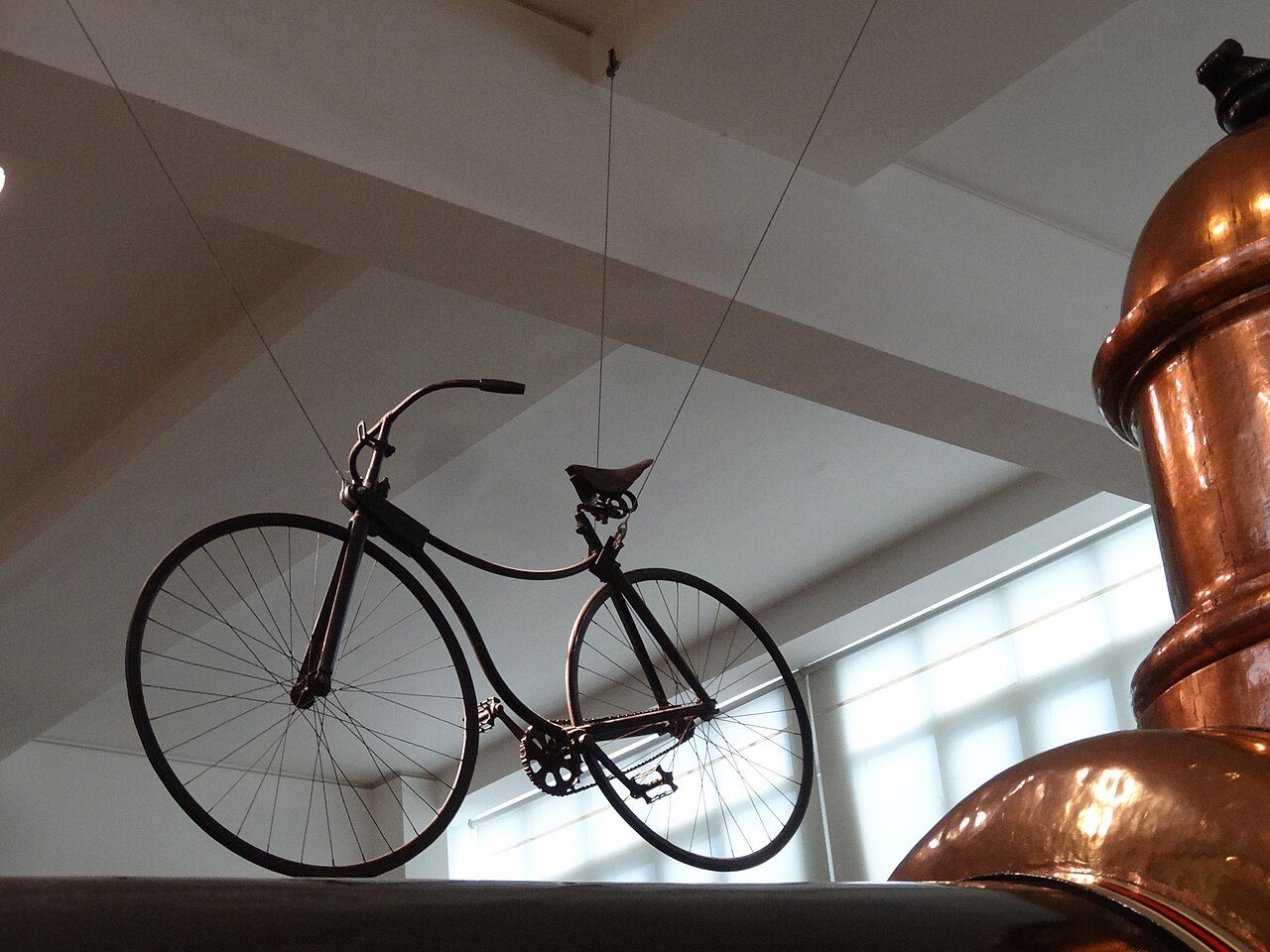
At a Glance
- First proven machine
- The draisine, ridden by Baron Karl von Drais in 1817
- Pedals arrive
- Early 1860s, Paris — cranks fitted to the front wheel
- Modern design
- The Rover safety bicycle, John Kemp Starley, Coventry, 1885
- Key features
- Two similar-sized wheels, chain drive to the rear wheel, low centre of gravity
- Comfort breakthrough
- Pneumatic tyre, introduced by John Boyd Dunlop in 1888
- Typical speed
- 16–24 km/h (10–15 mph) with little effort — four to five times walking pace
- Worldwide
- Bicycles outnumber automobiles about two to one globally
Four Times Walking Pace for the Same Effort
Few inventions are at once so old, so simple and so unfinished-looking as the bicycle — and few have spread so far. A rider on a standard bicycle travels at four to five times the pace of walking for about the same effort, which is why Britannica calls the bicycle the most efficient means yet devised to convert human energy into mobility. Globally, bicycles outnumber automobiles roughly two to one and outsell them three to one.
Yet the bicycle was not invented in a single moment. Historians, Britannica notes, disagree about its invention, and it is most likely that no individual qualifies as the inventor: the machine evolved through the efforts of many hands over most of the 19th century. A wooden running machine, a pedal velocipede, a giant-wheeled 'ordinary' and finally the chain-driven safety bicycle each solved one problem and created another.
The design that finally worked — two similar-sized wheels, pedals between them, a chain driving the rear wheel — was settled by 1885. Cyclists today ride a direct descendant of that machine.
From Draisine to Penny-Farthing
The first two-wheeled, rider-propelled machine for which there is solid evidence was the draisine of Baron Karl von Drais of Germany. In 1817 he rode it 14 km, propelling himself by paddling his feet on the ground; the wooden machine had steering but no pedals. London coachmaker Denis Johnson patented an improved 'pedestrian curricle' in 1818 and built more than 300 — the fashionable 'hobby-horses' or 'dandy horses' — but the craze faded within a year, and experimenters turned to three and four wheels for four decades.
Pedals came in the early 1860s in Paris, fitted to the front wheel of the velocipede. Pierre Lallement demonstrated such a machine in 1863, and Pierre Michaux and his son Ernest were building them by 1864. With iron-rimmed wooden wheels, the 'boneshaker' rattled its riders thoroughly, but it started a genuine craze and a real industry. To go faster, makers enlarged the front wheel — by the 1870s James Starley's Ariel and its successors, the 'ordinary' or penny-farthing, perched the rider over a front wheel that could exceed five feet. Speed rose; so did the danger of a 'header', a headfirst fall over the handlebars.
The Science Museum Group's collection shows how the answer emerged: experimenters such as Gloucestershire bootmaker Thomas Shergold were building rear-wheel chain-drive 'safety' designs in the 1870s, precisely because sitting over a tall front wheel was unstable and dangerous. What was needed was a way to gear the pedals so that small wheels could still travel fast.
Timeline
- 1817
Karl von Drais rides his wooden Laufmaschine — the draisine — 14 km in Germany; it is patented the following year.
- 1818–1819
Denis Johnson's 'hobby-horses' enjoy a brief fashionable craze in London before fading.
- Early 1840s
In Scotland, Kirkpatrick Macmillan is associated with treadle-driven two-wheelers whose rods turn cranks on the rear wheel.
- 1863–1864
Pedals reach the front wheel in Paris: Lallement demonstrates a pedal velocipede and the Michaux family begins building them.
- 1868
The word 'bicycle' comes into use in Europe, replacing the clumsier 'vélocipède de pedale'.
- 1871
James Starley's Ariel sets the standard for the high-wheel 'ordinary', with a 48-inch front wheel.
- 1880
Hans Renold invents the bush roller chain in Manchester — the durable chain the safety bicycle needs.
- 1885
John Kemp Starley's Rover Safety, built in Coventry, combines similar-sized wheels, rear chain drive and direct steering — the first recognisably modern bicycle to win the market.
- 1888
John Boyd Dunlop introduces the pneumatic tyre in Belfast, transforming the bicycle's comfort.
- 1890s
The safety bicycle, now with pneumatic tyres, sparks a worldwide cycling boom — and the Science Museum records two riders circumnavigating the globe on Humber safeties, returning in 1893.
The Safety Bicycle Opened Travel to Everyone
The safety bicycle changed who could travel. The penny-farthing had been a sporting machine for fit, daring young men; the safety, as the Science Museum Group explains, put the saddle low between two smaller wheels, making the machine easier to mount, steadier to ride and open to almost everyone. Mass production in Coventry, across Europe and in the United States drove prices down through the 1890s, and cycling became the first cheap, personal, mechanical transport in history.
Its social effects were outsized. Britannica notes that cycling brought men and women together unchaperoned, expanded the market to large numbers of women, and came to symbolise the women's movement — a machine you could ride in rational dress, under your own power, wherever the road went. The bicycle also trained the workforce and pioneered the technology — ball bearings, chain drive, pneumatic tyres, lightweight tubing — that the motorcycle and motor industries would inherit.
The 1890s Design That Still Rules
The diamond frame, chain drive and pneumatic tyres of the 1890s remain the default bicycle today, refined by gears, aluminium and carbon fibre rather than replaced. The Netherlands, Denmark and Japan actively promote cycling for shopping and commuting, and cities worldwide build cycle paths as the cheapest, cleanest way to move people short distances.
More than two centuries after von Drais paddled along a German road, his basic insight still holds: two wheels in line, balanced by a moving rider, are an astonishingly efficient way to travel. Every balance bike given to a toddler today is, in form, his draisine returned.
Sources
- Encyclopaedia Britannica — Bicycle
- Science Museum Group Blog — Cycle stories
- Science Museum Group Collection — Rudge 'ordinary' or 'penny farthing' bicycle
- Wikipedia — History of the bicycle (corroboration)
The facts on this page were checked against these sources on 18 November 2026. The History Trail's permanent pages are researched and written for this site; the live profiles elsewhere on The History Trail are assembled automatically from Wikipedia and Wikidata.
About the Author
Researched and written by the The History Trail Editorial Team — the accountable editorial function behind this site's permanent story pages. The team works from the published sources cited on each page; it does not invent historians, reviewers or credentials, and it corrects errors openly.
Fact Check
Every load-bearing fact on this page traces to one of the sources listed above, and significant claims link to their source in the text. Our checking method is described on the methodology page; errors can be reported via the corrections page.
Sources & Citations
Cite this page as: The History Trail Editorial Team, The History Trail — this article's title, publication and update dates are shown beneath its headline. The full source list appears under Sources above; the site's source standards are on the sources page.