
Things
Potato
The potato, Solanum tuberosum, is a starchy tuber crop domesticated by Indigenous farmers in the Peruvian-Bolivian Andes over 7,000 years ago. Carried to Europe by Spanish ships in the 16th century, resisted for generations, then adopted as the food of the poor, it powered population growth, caused catastrophe in Ireland when blight struck in 1845, and is now guarded in its homeland by the International Potato Center in Lima.
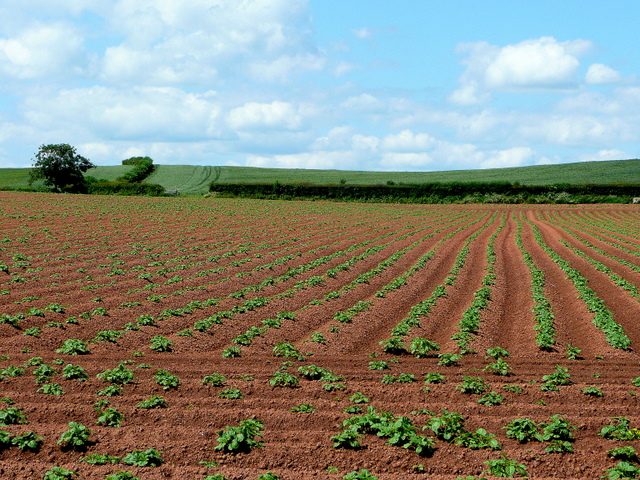
At a Glance
- Scientific name
- Solanum tuberosum, in the nightshade family (Solanaceae), grown for its starchy underground tubers
- Homeland
- The Peruvian-Bolivian Andes; domesticated by Indigenous peoples over 7,000 years ago, in Britannica's account
- Arrival in Europe
- Introduced by the Spaniards in the second half of the 16th century; a Canary Islands shipping record dates to 1567
- Why it spread
- High yields on small plots in cool, wet climates; a major crop in Ireland by the late 1600s and in much of continental Europe by the late 1700s
- The Great Famine
- Late blight (Phytophthora infestans) destroyed Irish crops from 1845; about one million deaths and over a million emigrants are the usual estimates
- Diversity today
- The International Potato Center in Lima, founded in 1971, conserves thousands of native and wild varieties; Quechua farmers in Peru's Potato Park grow over 1,400 native varieties
Introduction
The potato began as an Andean achievement. Indigenous farmers in the highlands of what are now Peru and Bolivia selected edible tubers from bitter, poisonous wild relatives, and over thousands of years created hundreds of varieties suited to different heights, soils and frosts. Britannica records that potatoes are thought to have been domesticated several times by Indigenous peoples of the central Andes over 7,000 years ago, becoming a staple of Andean civilisations including the Inca. Andean farmers also freeze-dried potatoes into chuno, a light, long-keeping food that could be stored against bad years.
From there the potato crossed the Atlantic in Spanish ships, was feared and resisted in Europe for two centuries, then fed the fastest population growth in European history. It also produced Europe's most notorious famine when one disease met a single-crop food system in Ireland.
The Columbian Exchange and a Suspicious Europe
Spanish invaders encountered the potato in the Andes and it was introduced into Europe during the second half of the sixteenth century, Britannica records, becoming one of the most significant crops of the Columbian Exchange, the great transfer of plants, animals and diseases between hemispheres after Columbus. A written record from the Canary Islands in 1567 notes barrels of potatoes shipped to Antwerp, and by 1573 a hospital in Seville was buying them as food. From Spain and the Canaries the tuber travelled slowly through Italy, the Low Countries, Britain and Ireland.
Europe's first reaction was suspicion, and it was not irrational. The potato belongs to the nightshade family, kin to deadly nightshade, its green tubers and leaves carry bitter glycoalkaloids, and it resembled nothing in the European diet. It was grown as a curiosity, fed to animals, and in places blamed for disease. Adoption came from the top and from necessity together: officials and landowners in France and the German states promoted it, a potato flower was worn in Louis XVI's buttonhole as a courtly endorsement, in the Smithsonian Magazine account, and the famines of the early 1770s pushed northern Europe to move the crop from garden plots into open fields.
Adoption, Growth and Catastrophe in Ireland
Where it was adopted, the potato was transformative because it produced more food from less land than grain, in cool, wet climates where wheat struggled. Britannica notes that by the end of the seventeenth century it was a major crop in Ireland, and by the end of the eighteenth a major crop in continental Europe, particularly Germany. Historians have credited it with diversifying diets and supporting agricultural and population growth across the continent. Ireland showed both the power and the danger of that success. On small, subdivided tenancies the potato was the one crop that could feed a family, and by 1845 millions of Ireland's poorest people depended on it almost entirely, and on very few varieties.
In 1845 the late blight organism, Phytophthora infestans, a fungus-like water mould, reached Europe from the Americas and destroyed potato crops in successive years, worst in 1846 and 1848 in Britannica's account. In Ireland the failure became the Great Famine of 1845 to 1852. Figures can only be given as attributed estimates: about one million people are usually estimated to have died, most of them from hunger-related diseases rather than starvation alone, and more than a million emigrated during the famine years, rising to about two million departures by 1855. Ireland's population, about 8.5 million in 1845, was counted at about 6.55 million in the census of 1851, and it kept falling for generations.
Timeline
- Over 7,000 years ago
Indigenous peoples of the central Andes domesticate the potato, probably several times, from wild tuber-bearing species, according to Britannica.
- Andean era
Andean farmers develop hundreds of varieties and freeze-dry potatoes into chuno, a storable food for high-altitude life.
- 1530s
Spanish invaders encounter the potato in the Inca world; early Spanish writers describe it as the bread of the Indians.
- 1567
A Canary Islands record notes barrels of potatoes shipped from Gran Canaria to Antwerp, the earliest known record of the crop outside South America.
- Second half of the 16th century
Potatoes are introduced into Europe, in Britannica's dating, and spread slowly from Spain through Italy and northern Europe.
- By the end of the 17th century
The potato is a major crop in Ireland, valued for feeding a family from a very small plot.
- Early 1770s
Famines in northern Europe accelerate the move of potatoes from gardens into open fields, promoted by officials and landowners.
- 1845-1852
Late blight destroys successive Irish potato crops; the Great Famine kills an estimated one million people and drives mass emigration.
- 1971
The International Potato Center (CIP) is founded in Lima, Peru, to research and conserve potato and other Andean root and tuber crops.
- Today
CIP's genebank in Lima conserves thousands of native and wild potato varieties, the living library breeders use against blight and climate change.
Significance
The potato's significance is demographic. By yielding heavily on poor land in cool climates, it loosened the old link between population and grain harvests, and Smithsonian Magazine, drawing on the historian William H. McNeill, describes how by feeding rapidly growing populations it helped a handful of European nations to expand their power between 1750 and 1950. The same article notes that the International Potato Center in Peru has preserved almost 5,000 varieties, a measure of how much diversity the Andean original still holds compared with the narrow genetic base of the crop that failed in Ireland.
That contrast is the potato's central lesson. Diversity was safety in the Andes, where farmers planted many varieties across many heights; uniformity was catastrophe in Ireland, where one variety on one crop carried a whole population. Modern potato science, centred on CIP, founded in Lima in 1971, exists largely to rebuild the first system inside the second: its genebank holds, in Modern Farmer's account, about 4,700 native Andean varieties and 2,400 wild relatives, screened for resistance to the pests, diseases, frost, heat and drought that still threaten the crop.
Myths and disputes
Who brought the potato to Europe? Statues and stories have credited Francis Drake and Walter Raleigh, and a German statue of Drake once hailed him as disseminator of the potato in 1586. Smithsonian Magazine treats such claims sceptically: the documented route runs through Spanish ships, the Canary Islands and Seville, and the credit, the magazine argues, belongs above all to the Andean peoples who domesticated the plant. Raleigh's Irish estates may have grown early potatoes, but the heroic single-importer story does not survive the shipping records.
The causes of the Great Famine are also still honestly debated, and this page presents that debate rather than settling it. Historians agree the blight destroyed the food of the poorest and that the official response fell far short; they argue over how far land systems, absentee landlordism, single-crop dependence and the British government's laissez-faire policies each turned a crop failure into a catastrophe. The charge that the famine was a deliberate genocide is still made in public debate, but most famine historians reject that label while condemning the response. What is not disputed is the scale: about a quarter of Ireland's population died or emigrated within a few years.
Legacy
Today the potato is one of the world's main food crops, cultivated on every inhabited continent in Britannica's summary, and central to food security precisely because it feeds many people from little land and water. Its centre of gravity has returned, scientifically, to its homeland: in the Potato Park near Pisac in Peru, Quechua communities cultivate more than 1,400 native varieties with traditional terrace farming, Britannica notes, preserving both biodiversity and Indigenous knowledge, while CIP's breeders release blight-resistant varieties built from wild Andean relatives.
The potato's legacy is therefore double, like its history. It is proof that a humble tuber, patiently bred by mountain farmers, can feed a world, and a permanent warning, written in Ireland's empty townlands and emigrant ships, of what happens when a whole people is left depending on a single crop, a single variety and a single harvest.
Sources
- Encyclopaedia Britannica - Potato
- Smithsonian Magazine - How the Potato Changed the World
- International Potato Center - International Potato Center (CIP) Delegates Attend COP21
- Modern Farmer - Uber Tubers: Welcome to the International Potato Center
- University of California Agriculture and Natural Resources - A Vegetable that Changed the World!
The facts on this page were checked against these sources on 19 November 2026. The History Trail's permanent pages are researched and written for this site; the live profiles elsewhere on The History Trail are assembled automatically from Wikipedia and Wikidata.
About the Author
Researched and written by the The History Trail Editorial Team — the accountable editorial function behind this site's permanent story pages. The team works from the published sources cited on each page; it does not invent historians, reviewers or credentials, and it corrects errors openly.
Fact Check
Every load-bearing fact on this page traces to one of the sources listed above, and significant claims link to their source in the text. Our checking method is described on the methodology page; errors can be reported via the corrections page.
Sources & Citations
Cite this page as: The History Trail Editorial Team, The History Trail — this article's title, publication and update dates are shown beneath its headline. The full source list appears under Sources above; the site's source standards are on the sources page.